
By Sumaiya Farheen, September 2026.
That nagging pain deep in your buttock. The tingling down your leg. The feeling that sitting for too long somehow makes everything worse.
If that sounds familiar, you may have come across piriformis syndrome.
And if you’re searching for piriformis syndrome exercises, you’re probably looking for something simple: What can I actually do to feel better?
The good news is that gentle stretching, mobility work and strengthening exercises can form part of managing piriformis-related symptoms. But there’s an important catch: piriformis syndrome can feel a lot like sciatica, and not every type of leg pain comes from the piriformis muscle.
So let’s look at what may be happening, which piriformis syndrome stretches and exercises may help, and when it’s time to get your symptoms checked.
What is piriformis syndrome?
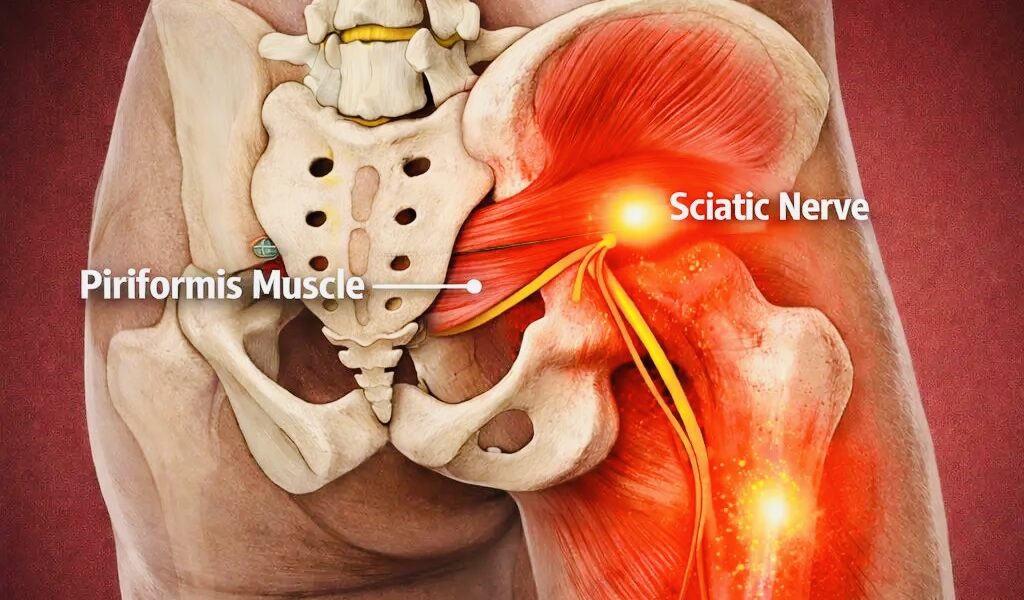
Piriformis syndrome happens when the piriformis muscle irritates or compresses the sciatic nerve.
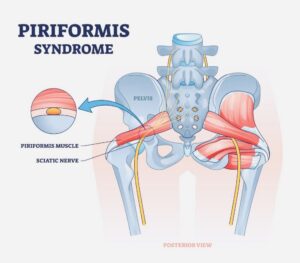
The piriformis is a small muscle deep in each buttock. It helps with hip movement and stability and sits very close to the sciatic nerve.
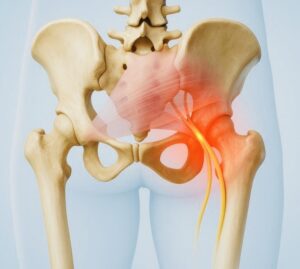
When the muscle becomes irritated, swollen or goes into spasm, it can affect the nearby nerve. This can lead to pain, tingling or numbness in the buttock and sometimes down the back of the leg.
It’s also why piriformis syndrome can be so confusing.
It can feel remarkably similar to sciatica.
What does piriformis syndrome feel like?

Symptoms can vary from person to person, but you may notice
| What you may feel | When you may notice it |
| Deep ache in the buttock | After sitting for a while |
| Hip or upper-thigh pain | During movement or activity |
| Burning or shooting pain | Into the buttock or leg |
| Tingling or pins and needles | Along the back of the leg |
| Numbness | In the buttock or leg |
| Pain travelling down the leg | Particularly after prolonged sitting |
| Discomfort | When walking, running or climbing stairs |
| Difficulty sitting comfortably | During longer periods of sitting |
Not everyone experiences the same symptoms, and similar pain can also come from the lower back. If symptoms persist or keep returning, it’s worth getting them assessed.
How can piriformis syndrome symptoms vary?
The way symptoms feel can sometimes give you a better idea of what you’re experiencing, although symptoms alone cannot confirm that the piriformis muscle is the cause.
For some people, the discomfort feels mainly muscular, with tightness or a deep ache around the buttock. For others, irritation around the sciatic nerve may produce sensations such as tingling, numbness or shooting pain.
| Symptom | How it may feel |
| Buttock pain | A deep ache or tight feeling |
| Hip or thigh pain | Aching around the hip or upper thigh |
| Burning or shooting pain | Pain that can travel into the leg |
| Tingling or pins and needles | Often felt along the back of the leg |
| Numbness | Reduced sensation in the buttock or leg |
| Pain after sitting | Symptoms may worsen after sitting for longer periods |
| Pain with movement | Discomfort when walking, running or climbing stairs |
| Sitting discomfort | Difficulty staying comfortable for long periods |
For some people, it may feel like a tight or irritated muscle. For others, it can feel more like a nerve problem, with tingling, numbness or shooting pain.
That difference matters because these symptoms can have several possible causes, including problems originating in the lower back.
Piriformis syndrome vs sciatica: what’s the difference?
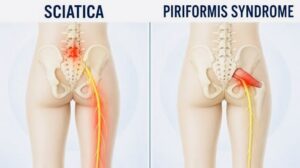
They can feel very similar, which is why it’s easy to get the two mixed up.
Here’s the simple way to think about it
| Sciatica | Piriformis syndrome |
| Is a broader term for sciatic nerve pain | Usually involves the piriformis muscle in the buttock |
| The nerve can be irritated or compressed in different places | The sciatic nerve may become irritated around the piriformis muscle |
| Can start in the lower back, buttock or leg | Often starts around the buttock |
| Can cause similar pain, tingling or numbness | May cause pain, tingling or numbness down the leg |
The tricky part? The symptoms can look almost identical.
So if you’re getting pain travelling down your leg, don’t automatically assume it’s your piriformis. The lower back can sometimes be involved too.
Piriformis syndrome can be difficult to distinguish from other causes of sciatic-type pain, which is why persistent or recurring symptoms should be assessed rather than self-diagnosed. Read the National Library of Medicine’s overview of piriformis syndrome.
If you’re experiencing pain from your lower back, hips or buttocks into both legs, sometimes described as bilateral sciatica, it’s particularly important not to assume that piriformis syndrome is the cause. Our guide to Lower Back Pain That Radiates Down Both Legs and Hips may help you understand what else could be going on.
Is a Pinched Nerve in the Hip the Same as Piriformis Syndrome?
If you’re searching for a pinched nerve in the hip, you may notice symptoms that sound very similar to piriformis syndrome.
You might experience pain around the buttock or hip, tingling, numbness, burning or shooting sensations that travel into the leg. These are often described as pinched nerve symptoms, although the sensation itself doesn’t necessarily tell you exactly where the nerve is being irritated.
Piriformis syndrome is one possible explanation. The piriformis muscle sits close to the sciatic nerve, so irritation or increased tension around the muscle can affect the nerve and produce sciatic-type symptoms.
Some people also describe this sensation as a trapped nerve in the hip. However, nerve-related symptoms can originate from different areas, including the lower back, so it’s important not to assume that the piriformis is always the cause.
If your symptoms are persistent, worsening, or associated with significant numbness or weakness, getting them assessed is more useful than trying to identify the cause yourself.
What causes piriformis syndrome?

Sometimes there’s no single obvious cause.
The piriformis can become irritated following
- Prolonged sitting
- Running or overuse
- Cycling
- Long-distance walking
- Repetitive movements
- A fall or other injury
- Muscle spasm
- Inflammation
- Poor preparation before exercise
- Improper lifting
Long periods of sitting can be particularly relevant if you work at a desk, drive for a living or spend hours travelling.
Suddenly increasing your running or training volume can also put more demand on the muscles around the hip and pelvis.
What are the best piriformis syndrome exercises?

There’s no single best piriformis exercise for everyone.
The right exercise depends on what’s causing your symptoms and how irritable they are.
The golden rule: don’t push through pain
With piriformis syndrome, gentle, controlled movements are usually more helpful than forcing a deep or painful stretch. Move slowly, stay within a comfortable range, and stop if an exercise makes your symptoms worse.
Below are simple exercises that can help improve hip flexibility, mobility, and strength while easing tension around the piriformis muscle.
How often should you do piriformis syndrome exercises?
Consistency matters more than pushing yourself.
A few gentle exercises performed regularly may be more useful than one long, uncomfortable stretching session.
But listen to your symptoms.
Piriformis Syndrome Exercises: Where Should You Start?
If you’re dealing with a sore or tight buttock, it’s tempting to search for one exercise that will magically make everything feel better.
Unfortunately, it isn’t usually that simple.
The piriformis works alongside the other muscles around your hips and pelvis, so a sensible routine may include a combination of gentle stretching, hip mobility and glute strengthening.
Here are some exercises from our own movement library that may help you explore those areas gently.
1. The Seated Glute Stretch Exercise
If you’re looking for a gentle way to stretch the muscles around the buttock and hip, this is a useful place to start.
Keep the movement comfortable. You shouldn’t have to force the stretch or push through sharp pain.
2. Mobilise The Hip
The piriformis doesn’t work on its own. Your hips, pelvis and surrounding muscles all contribute to how you move.
Gentle hip mobility can therefore be a useful part of a broader exercise routine.
Move slowly and stay within a comfortable range.
3. Glute Strengthening Exercises
Stretching is only one side of the picture.
Building strength around the hips and glutes can help support comfortable movement and may be a useful progression once your symptoms have settled.
Start at a level that feels manageable rather than trying to do too much too soon.
What if the pain travels down your leg?
If you’re experiencing shooting pain, tingling or numbness travelling down the leg, don’t automatically assume it’s piriformis syndrome.
Sciatic-type symptoms can have several possible causes, including problems originating in the lower back.
You can also watch our Relieve Sciatica by releasing stress in the shin, foot and back video for another perspective on managing movement around the lower limb.
What Causes Sciatica Buttock Pain?
If you’re searching what causes sciatica buttock pain, the answer isn’t always straightforward.
Sciatic-type buttock pain can have several possible causes. Irritation of the sciatic nerve can occur around the lower back, while irritation around the piriformis muscle may produce similar pain in the buttock and down the leg.
Muscle tightness and muscle tension around the hips and buttocks can also contribute to discomfort, particularly after prolonged sitting, repetitive activity or changes in training.
This is why the location of the pain alone isn’t enough to identify the cause. Pain in the buttock that travels down the leg can feel very similar whether the source is around the piriformis or the lower back.
If you’re unsure what’s causing your symptoms, particularly if they are persistent or keep returning, a professional assessment can help establish what may be contributing to them.
Can sitting make piriformis syndrome worse?

For some people, yes.
Long periods of sitting can aggravate piriformis-related symptoms and put sustained pressure around the buttocks and hips.
If you spend most of your day sitting, try something simple.
Get up regularly.
Walk around. Change position. Stretch gently. Give your hips and back a break.
You don’t need to turn your day upside down.
Even short movement breaks can be easier to maintain than sitting for hours and then trying to undo it all with one big stretching session.
What should you avoid?
When your symptoms are flaring, more isn’t necessarily better.
Try to avoid
- Forcing a stretch
- Bouncing during stretches
- Exercising through sharp pain
- Ignoring increasing numbness or tingling
- Suddenly increasing your training
- Long periods of uninterrupted sitting
- Returning immediately to activities that repeatedly trigger your symptoms
If running hurts, reduce it temporarily.
If cycling makes things worse, take a break.
If sitting aggravates your symptoms, change position more frequently.
The goal isn’t to stop moving. It’s to find a level of movement your body can tolerate while it settles.
Where does Backaid fit in?
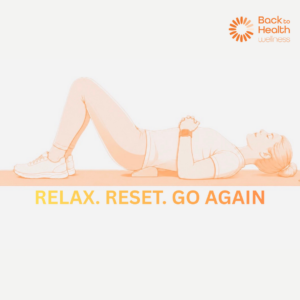
This is where we want to be clear. Backaid isn’t a treatment or cure for piriformis syndrome. It’s a home back-care device designed around gentle positioning and relaxation of the lower back and pelvic area.
And that distinction matters.
Piriformis syndrome exercises are aimed at mobility, stretching and strengthening. The backaid has a different role- it can be incorporated into a broader routine that gives you a period of gentle positioning and relaxation.
The lower back, pelvis and hips work together every day- when you sit, stand, walk, bend and lift.
So rather than looking for one miracle exercise or one product to solve everything, think about your overall back-care routine.
- Appropriate exercise.
- Regular movement.
- Less prolonged sitting.
- Gradual strengthening.
- And time to relax.
You can learn more about how BackAid works in our guide to The BackAid Device for Back and Leg Relief.
Can Backaid replace piriformis syndrome exercises?
Think of Backaid as something that can sit alongside a sensible routine rather than replace targeted exercise or professional treatment.
Your routine might include
- Gentle piriformis stretches
- Hip mobility
- Progressive strengthening
- Regular walking or other comfortable activity
- Movement breaks from sitting
- Good lifting habits
- A period of relaxation and recovery
If your symptoms aren’t improving, a physiotherapist or other healthcare professional can help determine which exercises are appropriate for you.
Other ways to manage piriformis-related pain
Exercises aren’t the only option. A few other approaches may help ease symptoms and support recovery
Heat or cold: Cold may feel soothing when the area is irritated, while heat can help relax tight muscles. Choose whichever feels more comfortable.
Massage: Gentle massage may help relax tight muscles around the buttocks and hips. Avoid deep or aggressive pressure if it makes your symptoms worse. Thinking About a Massage? Explore Our Massage Services.
Activity modification: If a particular activity consistently triggers your pain, try reducing or modifying it temporarily rather than stopping all activity.
Physiotherapy: A physiotherapist can assess your symptoms, movement and strength, then create a treatment plan tailored to your needs. Want to Find Out How Physiotherapy Could Help? Take a Look Here.
How long does piriformis syndrome take to improve?
There’s no guaranteed timeline.
Many episodes improve within days or weeks with appropriate activity modification and simple treatment. However, symptoms can return.
If your symptoms continue, keep returning or are interfering with everyday life, it’s worth getting them assessed.
That’s particularly important because other conditions can produce similar buttock and leg symptoms.
Tried everything and still struggling?
If you’ve tried the stretches, exercises, movement changes, massage or physiotherapy and you’re still looking for something you can do at home, there is another option worth knowing about.
Backaid is designed to support gentle positioning and relaxation around the lower back and pelvis. It can be used as part of your everyday routine, alongside appropriate exercise and movement.
It isn’t a treatment or cure for piriformis syndrome- but if you’re looking for a simple, practical way to give your back and pelvis some extra support at home, why not take a look? See How BackAid Works & Pre-Order Yours
Frequently asked questions
Yes. Irritation around the piriformis can cause pain, tingling or numbness into the back of the thigh or leg. Similar symptoms can also come from the lower back, so an assessment can help identify the cause.
Gentle walking can help you stay active if it doesn’t aggravate your symptoms. Start comfortably and reduce the distance or pace if your pain increases.
Gentle stretching may help, but don’t force it. Stop if stretching causes sharp pain or increases tingling or numbness.
It can. Long periods of sitting may aggravate symptoms, so try changing position regularly and taking short movement breaks.
It varies from person to person. If symptoms persist, keep returning or affect your everyday activities, a physiotherapy assessment can help.
They can feel very similar. Pain travelling down the leg isn’t necessarily caused by the piriformis, so persistent symptoms should be assessed rather than self-diagnosed.
If your symptoms aren’t improving, keep coming back or are limiting your normal activities, it’s worth getting assessed.
Massage may help when muscle tightness around the buttocks and hips is contributing to your discomfort.