

By Andrew Siyabalawatte,
If you’ve been struggling with back pain, neck stiffness, sciatica or recurring muscle discomfort, you may have found yourself searching online for osteopath vs chiropractor and wondering which one you should visit.

It’s a common question, particularly when pain starts interfering with everyday activities. Perhaps you struggle to sit comfortably at your desk, experience stiffness when getting out of bed, or find that your back pain keeps returning despite trying different treatments.
You may have heard that chiropractors focus on spinal adjustments, while osteopaths take a more holistic approach to the body. But is that really the difference? And, more importantly, which practitioner is likely to be more suitable for your particular problem?
Understanding the difference between an osteopath and a chiropractor can help you make a more informed decision about your treatment.
At Back to Health Wellness, we understand that no two people experience pain in exactly the same way. Our approach focuses on understanding your symptoms, assessing how your body moves and identifying suitable treatment options to support your recovery.
In this guide, we’ll explain everything you need to know about osteopath vs chiropractor, including their training, treatment methods, similarities, differences and what to consider when choosing the right practitioner for back pain.
What Is the Difference Between an Osteopath and a Chiropractor?

The main difference between an osteopath and a chiropractor is their professional approach, treatment philosophy and the techniques they may use.
Both professions work with the musculoskeletal system, including the spine, joints, muscles and surrounding soft tissues. Both can assess movement problems and use hands-on techniques, exercise advice and lifestyle recommendations as part of an individual treatment plan.
However, their traditional approaches have some differences.
Osteopathy generally places emphasis on how the muscles, joints, connective tissues and other structures of the body work together. Osteopaths may use joint mobilisation, soft tissue techniques, stretching, massage and manipulation where appropriate.
Chiropractic traditionally places particular emphasis on the spine, joint mechanics and the relationship between spinal movement and the nervous system. Chiropractors may use spinal adjustments, joint mobilisation, soft tissue treatment and rehabilitation exercises.
It’s important to understand that these approaches can overlap considerably. Modern osteopaths and chiropractors may use many of the same techniques, depending on their additional training and the patient’s needs.
So, when comparing an osteopath vs chiropractor, the decision shouldn’t be based simply on which treatment sounds better. It should be based on the practitioner’s experience, your symptoms, clinical assessment and the treatment approach recommended for you.
Osteopath vs Chiropractor: Why Understanding Your Symptoms Matters

When researching osteopath vs chiropractor, many people initially focus on which treatment provides the quickest relief.
However, understanding what may be contributing to your discomfort is equally important.
Back pain, neck stiffness and recurring muscle problems can involve several factors, including:
- Restricted joint mobility.
- Muscle tension and weakness.
- Postural habits and prolonged sitting.
- Repetitive movements and physical strain.
- Previous injuries.
- Reduced strength and flexibility.
- Everyday movement patterns.
This is why an individual assessment is important when deciding between an osteopath and chiropractor.
Rather than automatically recommending the same treatment to everyone, a qualified practitioner should consider your symptoms, medical history, movement and individual requirements.
Whether you’re considering osteopathy or chiropractic treatment, the goal should be to find an appropriate approach that supports better movement and helps you manage your condition.
Osteopath vs Chiropractor: Which Is Better for Different Conditions?

| Condition | Osteopath approach | Chiropractor approach |
| Lower back pain | May use soft tissue techniques, gentle joint mobilisation, stretching and strengthening exercises. | May use spinal adjustments, joint mobilisation and rehabilitation exercises where appropriate. |
| Neck pain and stiffness | May focus on muscle tension, joint mobility, gentle mobilisation and movement advice. | May focus on spinal and joint mobility, adjustments where appropriate and rehabilitation exercises. |
| Sciatica | May assess lower back, hip and muscle function and recommend suitable manual therapy and exercises. | May assess spinal and joint function and recommend appropriate mobilisation, adjustments or exercises. |
| Sports injuries | May use soft tissue treatment, stretching, mobility work and rehabilitation advice. | May use joint mobilisation, soft tissue techniques and exercises to support recovery. |
Which should you choose?
Both osteopaths and chiropractors can help assess certain musculoskeletal problems. The most suitable approach depends on your symptoms, medical history and individual assessment.
At Back to Health Wellness, we believe understanding the cause of your discomfort is an important first step towards choosing appropriate treatment.
You can explore our osteopathy services in Guildford and chiropractic services in Surrey to learn more.
What Does an Osteopath Do?

An osteopath assesses how your muscles, joints, spine and surrounding tissues are functioning together.
A typical osteopathy appointment starts with a detailed conversation about your symptoms, daily activities, posture, medical history, and movement patterns. Our Osteopath in Guildford, will then assess how your spine, joints, muscles, and surrounding tissues are functioning.
Rather than looking exclusively at the painful area, an osteopath may consider how your posture, movement habits, previous injuries and everyday activities contribute to your symptoms.
For example, someone experiencing lower back pain may also have restricted hip movement, tight surrounding muscles or reduced strength in the muscles supporting the spine.
These factors may contribute to discomfort and movement difficulties.
Depending on the assessment, osteopathic treatment may involve:
- Gentle joint mobilisation.
- Soft tissue massage and release.
- Stretching techniques.
- Spinal manipulation where appropriate.
- Movement and mobility exercises.
- Postural and lifestyle advice.
- Rehabilitation recommendations.
Treatment is adapted to the individual rather than following the same routine for everyone.
What Does a Chiropractor Do?
Chiropractor are trained to assess and manage problems involving the musculoskeletal system, with particular emphasis traditionally placed on the spine and its associated joints.
A chiropractic appointment generally begins with a discussion about your symptoms, medical history, previous injuries and daily activities.
Your chiropractor will then assess your movement, posture, joint function and other relevant clinical signs.
Depending on your individual circumstances, treatment may include:
- Chiropractic spinal adjustments.
- Joint mobilisation.
- Soft tissue treatment.
- Muscle stretching.
- Corrective and strengthening exercises.
- Advice on posture and everyday movement.
- Rehabilitation and self-management strategies.
Spinal adjustments are often associated with chiropractic care. These involve applying a controlled force to a joint to influence its movement.
However, not everyone requires spinal manipulation. Some patients may benefit more from gentler mobilisation, soft tissue techniques or an exercise-based approach.
Exercises Often Recommended Alongside Osteopathy
One of the most common questions people ask after learning what does an osteopath do is whether there are exercises that can help between appointments.
The answer is yes.
In many cases, simple movement and strengthening exercises can support the work done during osteopathy treatment and help prevent pain from returning.
For patients with recurring back pain, we often recommend gentle core and spinal stability exercises because they help support the spine during everyday activities like sitting, walking, lifting, and driving.
A great example is our Spinal Stabilisation Exercises For Back Pain, which focus on improving control, posture, and movement around the lower back.
Is Osteopathy Better Than Chiropractor‘s Treatment?
There is no universal answer.

One of the biggest misconceptions surrounding osteopath vs chiropractor is that one profession is always better for back pain.
In reality, the effectiveness of treatment depends on several factors, including:
- The underlying cause of your symptoms.
- The severity and duration of your pain.
- Your medical history.
- Your physical activity and lifestyle.
- The practitioner’s qualifications and experience.
- Whether treatment includes appropriate exercises and self-management advice.
For example, someone experiencing muscular tightness around the lower back may benefit from soft tissue treatment and mobility exercises.

Another person with restricted spinal movement may be assessed for appropriate joint mobilisation or other manual techniques.
Both approaches can be considered where clinically appropriate.
The best practitioner is one who listens to your concerns, explains their findings, discusses these options and recognises when another healthcare professional should be involved.
What About Spinal Decompression for Back Pain?
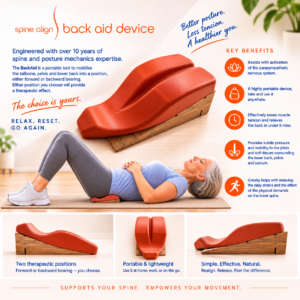
Some people researching osteopath vs chiropractor also come across spinal decompression and wonder whether it offers another way to manage back discomfort.
Spinal decompression is a broad term used for different approaches intended to reduce loading or tension around the spine.
It is important to distinguish between clinical spinal decompression procedures and devices designed to position or mobilise the pelvis and lower back.
At Back to Health Wellness, we also provide information about the Backaid spinal decompression device.
The Backaid is designed to position the pelvis and lower back in different directions, with the aim of supporting relaxation and movement around the lower back.
It may be an additional option for some people, but it should not be viewed as a guaranteed treatment for disc problems, sciatica or spinal conditions.
You can explore our spinal decompression machine and Backaid device here.
If you are considering using a decompression device, it is sensible to discuss its suitability with a qualified healthcare professional, particularly if you have an existing spinal condition.
Osteopath vs Chiropractor for Sports Injuries: Which Treatment Should You Choose?

Sports injuries are another common reason people look into osteopathy and chiropractic care.
Whether you run regularly, train at the gym, play golf, cycle or participate in competitive sports, repetitive movements and physical strain can contribute to muscle tightness, joint discomfort and restricted mobility.
So, when comparing an osteopath vs chiropractor for sports injuries, what should you consider?
An osteopath may assess how your muscles, joints and surrounding tissues work together, using soft tissue techniques, stretching, joint mobilisation and rehabilitation exercises where appropriate.
A chiropractor may focus on joint mechanics, spinal movement and muscular function, incorporating appropriate adjustments, mobilisation and exercises to support recovery.
Both approaches may be suitable for certain sports-related problems. The right choice depends on the nature of your injury, your movement assessment and your recovery goals.
How Can You Start Addressing Your Back Pain?

If back pain has started affecting your work, sleep, exercise or everyday routine, continually putting up with it isn’t your only option.
The first step is understanding what might be contributing to your symptoms and exploring appropriate ways to manage them.
At Back to Health Wellness, our two-step spine programme provides an opportunity to have your symptoms assessed, discuss your findings and explore suitable options.
The programme currently advertised on our website includes-
Step 1: A 50-minute consultation and first, where appropriate.
Step 2: A one-hour report of findings, personalised advice and a second, where appropriate.
You can discover our two-step approach to back pain and check the latest appointment and offer details.
There is no need to decide in advance whether you need an osteopath or chiropractor. Your assessment can help establish which approach, if any, is suitable for your symptoms.