
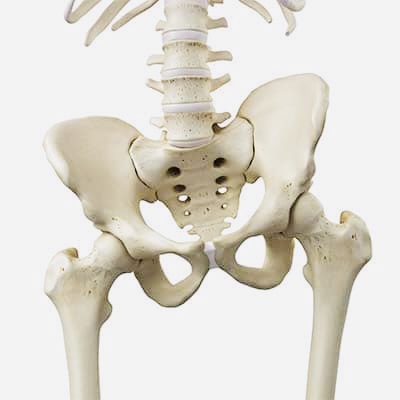
By Sumaiya Farheen, Nov 2026.
Pelvic positioning plays an important role in how the lower back, hips and trunk move together. When the pelvis tilts forwards or backwards, it can influence the curve of the lumbar spine, muscle activity and the way movement is coordinated during everyday activities.
If you are searching for a pelvic tilt corrector, you may be wondering whether you need a device, specific exercises or a combination of approaches to support your posture and mobility.
The right approach depends on your individual movement patterns, symptoms and underlying cause. There is no single ideal pelvic position for everyone, and not every pelvic tilt needs correction.
In this guide, we explain the difference between anterior and posterior pelvic tilt, how pelvic positioning relates to spinal biomechanics, which exercises may help, and how the Backaid device By Spinealign, may fit into an appropriate lower-back and pelvic mobility routine.
What Is a Pelvic Tilt?
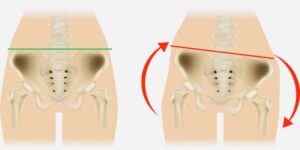
Pelvic tilt describes the orientation of the pelvis in relation to the trunk and lower limbs. The pelvis is formed by the sacrum and two hip bones, with the sacroiliac joints and pubic symphysis contributing to the stability of the pelvic ring.
The pelvis also works closely with the lumbar spine, abdominal muscles, gluteal muscles and hip flexors to coordinate standing, walking, bending and lifting.
Two commonly discussed movement patterns are anterior pelvic tilt and posterior pelvic tilt.
Anterior Pelvic Tilt
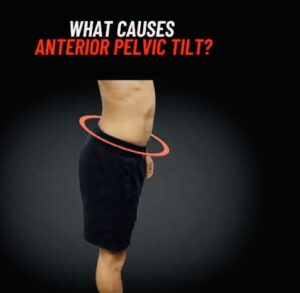
Anterior pelvic tilt occurs when the front of the pelvis rotates downwards relative to the back. This position is commonly associated with an increased curve in the lower back, although the relationship varies between individuals.
Some people may have an anteriorly tilted pelvis without pain or functional limitations. Others may experience discomfort or difficulty with certain movements.
Management may involve improving movement awareness, strengthening appropriate muscle groups and addressing global mobility limitations within the individual.
Want to Understand Your Posture Better?
Whether you have an anterior pelvic tilt, posterior pelvic tilt or simply want to improve your awareness of your posture, understanding how your spine, pelvis and surrounding muscles work together is an important first step.
We’ve created a free posture correction e-book to help you learn more about posture, common postural patterns and practical ways to support better movement and everyday spinal health.
Download Your Free Posture Correction E-book
Posterior Pelvic Tilt
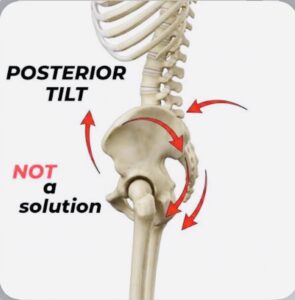
Posterior pelvic tilt occurs when the front of the pelvis rotates upwards relative to the back. This movement generally reduces the lumbar curve.
Posterior pelvic tilt is a normal movement, not automatically a problem. However, if a person has difficulty controlling pelvic movement or experiences discomfort during particular activities, targeted exercises may help improve coordination and control.
What Is a Pelvic Tilt Corrector?
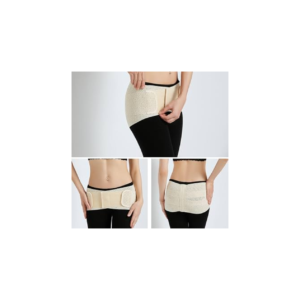
A pelvic tilt corrector is a term commonly used to describe a device, support tool or exercise aid intended to assist pelvic tilt corrector positioning, movement awareness or posture-related routines.
However, these products do not all work in the same way.
Some tools provide a surface for practising controlled pelvic tilt corrector movements. Others support particular positions or form part of a structured mobility programme.
A device should not be assumed to permanently realign the pelvis or correct an underlying structural problem simply because it changes the body’s position during use.
Before choosing a pelvic tilt corrector, consider its intended purpose, design, comfort, portability, instructions and suitability for your individual needs.
BackAid vs Other Pelvic and Spinal Mobility Devices
Different devices have different designs and intended uses. Comparing them can help you understand which type of tool may suit your needs.
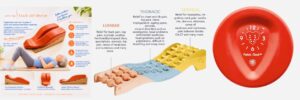
| Feature | Spinealign Backaid | Spinal Backrack | Pelvic Clock |
| Design | Pelvis and tailbone contoured rubber device | Wooden rack with paired nodules | Compact dome-shaped device |
| Main approach | Supports and mobilises the soft tissues specific to the pelvis and tailbone. | Uses body positioning and prescribed movements for spinal mobilisation | Supports controlled pelvic and lower-back exercises |
| Contact experience | Shaped rubber surface | Firm wooden contact points | Plastic |
| Positioning | Forward or backward bearing positions, as instructed | Positioned along the spine according to the manufacturer’s instructions | Used during prescribed pelvic and lower-back movements |
| Portability | Designed to be travel-friendly | Depends on the model and size | Compact format |
| Key differentiator | Focused on pelvic positioning, giving you choice | Distinguished by its wooden construction and paired nodules for targeted spinal contact | Distinguished by its focus on controlled pelvic movements rather than a spinal-rack design |
These devices should not be treated as equivalent or assumed to produce the same results. Their construction, positioning and intended uses differ. A product’s material or shape alone does not establish that it is more effective than another device.
Exercises That May Help With Pelvic Tilt Control
Exercises may help improve pelvic movement awareness, trunk coordination and muscle control. The appropriate exercises depend on whether the goal is to improve movement control, address a specific limitation or support recovery from an assessed condition.
The following are examples of exercises commonly used in general movement programmes. They are not appropriate for every person, particularly following trauma or surgery.
1. Pelvic Rotation Exercise
The pelvic rotation exercise focuses on controlled movement of the pelvis and may help you practise pelvic mobility and body awareness.
Move slowly and follow the technique demonstrated in the video. Keep the movement within a comfortable range rather than forcing your pelvis into a particular position.
2. Pelvic Self-Mobilisation Technique
Gentle pelvic self-mobilisation can help you explore comfortable pelvic movement and improve awareness of how your lower back and pelvis move together.
Follow the demonstrated technique carefully, keeping the movement controlled and avoiding positions that cause discomfort. The appropriate technique may vary depending on your symptoms and mobility.
3. Glute Bridges and Glute Strengthening
Glute bridges and other glute-strengthening exercises target the muscles around the hips and pelvis. Developing strength in these muscles can support everyday movements, including standing, walking and getting up from a seated position.
Use a comfortable range of motion, maintain control throughout the exercise and avoid pushing through pain. Choose the variation that suits your current ability.
4. Hip Mobility Exercise
Hip mobility exercises encourage comfortable movement around the hip joints and may be useful when stiffness or restricted movement affects daily activities.
Follow the movement demonstrated in the video without forcing the stretch or pushing beyond your comfortable range. Select exercises according to your mobility, symptoms and functional needs.
Stop any exercise that causes sharp pain, increasing discomfort, numbness or tingling.
A physiotherapist can help determine which exercises are appropriate and how to progress them.
Understanding Pelvic Tilt, Spinal Biomechanics and Pelvic Stability

The pelvis and lumbar spine work together during standing, walking, bending and lifting. Changes in pelvic orientation can influence lumbar lordosis, which is the natural inward curve of the lower spine.
Pelvic movement also affects how muscles coordinate to control the trunk and transfer forces through the hips and lower limbs.
However, a change in pelvic position does not automatically mean that spinal loading has increased or that a correction device is needed. The relationship between posture, loading and pain is complex, and the most suitable position varies between individuals.
For this reason, a pelvic tilt programme should focus on comfortable movement, functional ability and appropriate muscle coordination rather than forcing everyone towards one supposedly perfect alignment.
Backaid and Spinal Stress
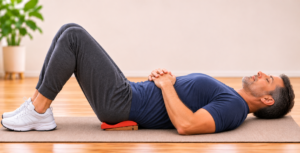
The position of the pelvis plays an important role in supporting the lower back. Changes in pelvic tilt can affect the natural curve of the lumbar spine and how forces are distributed during everyday movements such as bending, standing and lifting.
Gracovetsky et al. (1989) examined the relationship between pelvic position, lumbar curvature and compressive stress during spinal movement. This research provides useful background for understanding why pelvic positioning matters when considering lower-back support. Read the study on PubMed.
For Backaid, this relationship is particularly relevant because the device focuses on pelvic positioning and lower-back support. The aim is to take these biomechanical factors into account when supporting the pelvis, rather than assuming that one position is right for everyone. Further research would be needed to determine the specific effects of Backaid on spinal loading, back pain and everyday function.
Is the Backaid device Right for You?
If you are looking for a portable, contoured rubber tool to complement an appropriate daily back-care routine, the Backaid may be worth exploring.
Its design differs from wooden spinal racks and a generic dome-shaped device, offering another format for people considering home mobility tools.
The most important consideration is whether the device is suitable for your goals and whether you can use it comfortably and safely according to its instructions.
If you have ongoing pain, significant pelvic asymmetry, neurological symptoms or a history of pelvic trauma, consult a qualified healthcare professional before using a positioning device.
Meet The Backaid by Spinealign for Pelvic and Lower-Back Mobility
Understanding pelvic tilt is the first step. The next is finding a practical way to incorporate comfortable movement into your everyday routine.
While exercises such as pelvic rotations, glute bridges and hip mobility movements can help you work on strength, coordination and movement control, you may also be looking for a simple tool to complement your routine at home.
Unlike a routine that relies on exercises alone, the Backaid is designed to support pelvic and lower-back positioning through a simple, targeted approach to mobility.
Give Your Back the Support It Deserves
Looking for a practical way to complement your back-care routine? Discover the Spinal Decompression Device by spinealign and explore how it may support your approach to lower-back mobility and everyday comfort.