
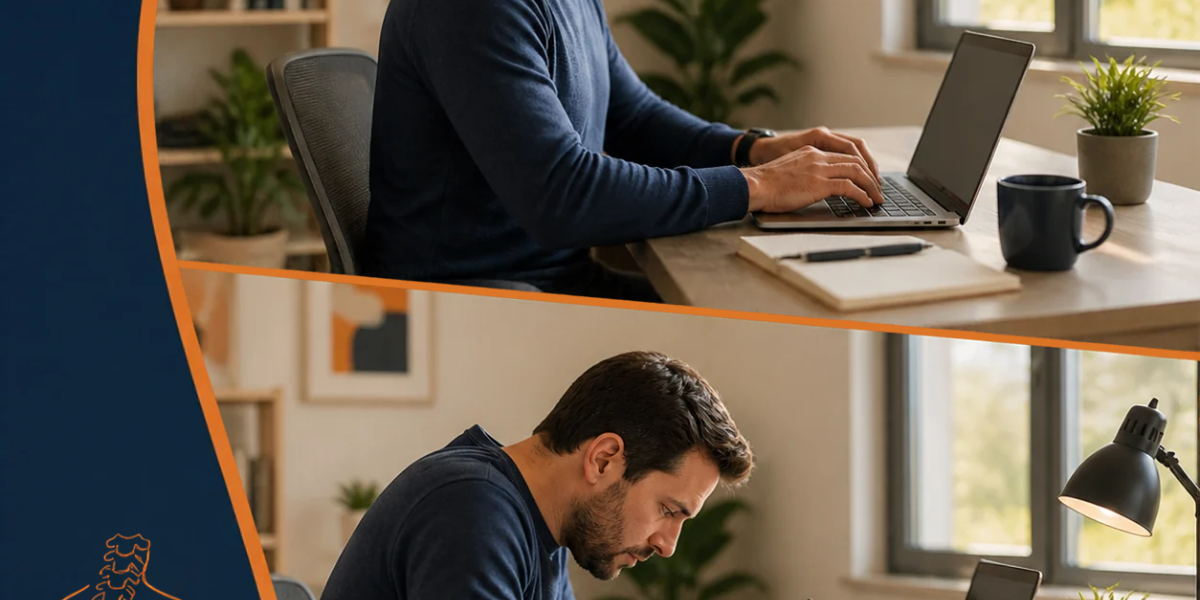
Have you ever noticed how your posture changes when you’re tired, stressed or having a difficult day? Your shoulders might begin to round forward, your head drops, and before you realise it, you’re sitting with your back curved and your body feeling a little heavier.
It’s something most of us do without thinking. Whether you’re working at a desk, looking down at your phone or spending a long time sitting on the sofa, slouching can gradually become part of your everyday routine.
But have you ever considered that the way you hold your body might influence more than just your appearance?
Research suggests that posture and mood may be more closely connected than we once thought. Spending long periods in a slouched position can also contribute to physical discomfort, particularly around the neck, shoulders and back.
The good news is that small changes to the way you sit, stand and move throughout the day can make a difference. Understanding why slouching happens is a useful first step towards developing healthier posture habits.
Why Do We Start Slouching?
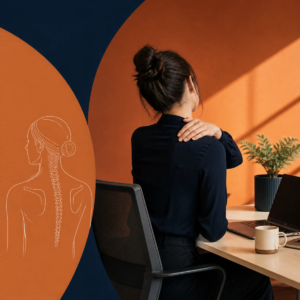
Slouching is something that can happen gradually. You might begin the day sitting comfortably, but after a few hours at your computer, your shoulders start creeping forward and your head moves towards the screen.
Before long, you’ve settled into a position that feels familiar, even if it isn’t particularly comfortable.
There are several everyday reasons why people develop slouched posture, including:
Prolonged sitting: Spending hours at a desk or in front of a screen can encourage you to remain in one position for too long.
Looking down at your phone: Frequently lowering your head to read messages or browse social media can place additional demands on your neck and upper back.
Muscle fatigue: When your body becomes tired, maintaining an upright position may feel more difficult.
Poor workstation habits: A screen that’s too low, an unsuitable chair or a poorly arranged desk can encourage you to lean forward.
Stress and low mood: When you’re feeling emotionally drained, you may naturally adopt a more closed or withdrawn posture.
Of course, slouching isn’t always a sign that something is wrong. Everyone changes position throughout the day. The concern is more about spending excessive time in one position without giving your body enough opportunity to move.
The Connection Between Slouching and Your Mood
Have you ever noticed that when you’re feeling particularly low, you tend to look down, round your shoulders or make yourself appear smaller?
It’s an interesting connection because posture doesn’t simply reflect how we’re feeling. Research suggests that the way we hold ourselves may also influence certain aspects of our emotional experience.
A study conducted by researchers at the University of Auckland, published in the Journal of Behavior Therapy and Experimental Psychiatry in 2017, explored whether changing posture could influence mood in people experiencing mild to moderate depressive symptoms.
The researchers recruited 61 participants and divided them into two groups. One group was encouraged to maintain an upright sitting position, while the other continued with their usual posture.
Participants then completed stressful tasks, including giving a short speech and performing mental arithmetic.
The findings were interesting. Those in the upright-posture group reported more positive feelings and less fatigue during the experiment. They also spoke more during the speech task and used fewer first-person singular words, such as “I” and “me”.
This suggests that sitting upright may influence how some people respond to stressful situations.
However, it’s important to remember that this was a relatively small, short-term study. Good posture is not a treatment or cure for depression, and more research is needed to understand how these effects work over longer periods.
Can Slouching Make You Feel More Tired?

It’s easy to overlook how much time we spend sitting in one position. Between working, driving, watching television and scrolling through our phones, many of us spend a large part of the day relatively inactive.
When you’re already feeling tired, slouching can become even more tempting. You might lean forward, rest your head in your hands or gradually sink into your chair.
Although slouching doesn’t automatically cause fatigue, staying in one position for too long can leave you feeling stiff and uncomfortable.
An upright but relaxed sitting position, combined with regular movement breaks, can help you feel more comfortable and alert.
Rather than trying to hold yourself perfectly straight all day, aim to change positions regularly and avoid remaining hunched over for extended periods.
What Happens to Your Body When You Slouch for Too Long?
One of the biggest problems with prolonged slouching is that your body becomes accustomed to certain movement habits.
When your head moves forward and your shoulders round, the way your neck, upper back and surrounding muscles work can change. Some muscles may become overworked, while others may become less active.
Over time, this can contribute to discomfort in different areas of the body.
1. Neck and Shoulder Discomfort
When you’re constantly looking down at a screen or leaning towards your desk, your neck and shoulder muscles have to work to support your head.
You might notice tightness around your shoulders, stiffness when turning your head or discomfort towards the base of your neck.
Taking regular breaks and adjusting your screen position can help reduce some of these demands.
2. Upper Back Tension
Rounded shoulders and a forward-leaning position can change how your upper back moves.
Some people notice tightness between their shoulder blades, particularly after spending several hours sitting at a computer.
Gentle movement, shoulder mobility exercises and changing your sitting position throughout the day can help.
3. Lower Back Discomfort
Slouching for extended periods can change the way your pelvis and lower back are positioned.
For some people, remaining in this position for too long may contribute to stiffness or discomfort, particularly when combined with limited movement.
However, back pain is complex. It isn’t always caused by posture, and sitting with a rounded back doesn’t automatically mean you’ll develop a back problem.
4. Headaches and Muscle Tension
Neck and shoulder tension can sometimes be associated with tension-type headaches.
If you regularly experience headaches after long periods at your desk, it may be worth looking at your workstation, screen height and daily movement habits.
Persistent or unusual headaches should always be assessed appropriately rather than automatically attributed to posture.
Simple Ways to Improve Your Posture and Reduce Slouching
You don’t need to change your entire lifestyle to improve your posture. Small, consistent adjustments throughout the day can make a real difference to how comfortable you feel.
If you spend hours sitting at a desk, looking at your phone or working from home, try introducing these simple habits.
1. Adjust Your Sitting Position
- Keep your computer screen at a comfortable eye level to avoid constantly looking down.
- Keep your feet supported on the floor.
- Allow your shoulders to relax rather than pulling them backwards.
- Choose a comfortable sitting position and change it regularly.
Remember: Good posture doesn’t mean sitting perfectly straight or keeping your body rigid all day.
2. Gently Move Your Shoulders
Notice your shoulders rounding forwards while working or using your phone?
Take a moment to:
- Gently roll your shoulders backwards.
- Allow them to drop away from your ears.
- Relax any unnecessary tension around your neck and upper back.
Avoid forcing your shoulders into an exaggerated position. Gentle, comfortable movement is what matters.
3. Take Regular Movement Breaks
One of the simplest ways to reduce prolonged slouching is to avoid sitting in exactly the same position for hours.
Try to:
- Stand up regularly.
- Walk around for a few minutes.
- Stretch gently if it feels comfortable.
- Change your sitting position throughout the day.
Even small opportunities to move can help reduce stiffness and make long periods of sitting more comfortable.
4. Keep Your Head and Neck Comfortable
Constantly looking down at your phone or leaning towards your computer can place additional demands on your neck.
To help:
- Bring your phone closer to eye level.
- Position your computer screen comfortably in front of you.
- Avoid pushing your head forwards towards the screen.
- Give your neck regular opportunities to move.
5. Strengthen the Muscles That Support Your Body
Your abdominal, back and shoulder muscles all play a role in supporting your body during everyday activities.
Suitable strengthening exercises can help improve muscular endurance and make everyday movements feel easier.
If you are unsure which exercises are right for you, a qualified physiotherapist or healthcare practitioner can help you choose exercises appropriate to your needs.
Why Good Posture Isn’t About Sitting Perfectly Straight

There’s a common misconception that good posture means keeping your back completely straight, pulling your shoulders back and holding that position all day.
In reality, your body is designed to move.
Even a seemingly good sitting position can become uncomfortable if you maintain it for hours without moving. That’s why regularly changing positions is just as important as being mindful of how you sit and stand.
Instead of worrying about achieving perfect posture, focus on developing a routine that includes:
- Moving regularly throughout the day.
- Avoiding prolonged periods of slouching.
- Keeping your workstation comfortable and practical.
- Building strength and flexibility through suitable exercise.
- Paying attention to discomfort rather than ignoring it.
Small, consistent changes are often easier to maintain than trying to correct everything at once.
It’s easy to dismiss slouching as nothing more than a bad habit, especially when you’re busy with work or everyday responsibilities.
But the way you sit, stand and move throughout the day can influence how comfortable you feel, how your muscles work and, potentially, how you respond to certain emotional situations.
You don’t need to spend every waking moment thinking about your posture. Simply becoming more aware of how you’re sitting, taking regular movement breaks and making small adjustments can be a worthwhile starting point.
And if you’re experiencing persistent back or neck discomfort alongside poor posture, don’t assume that simply sitting straighter will solve everything. Understanding the possible causes and getting appropriate advice can help you decide what to do next.
Your body doesn’t need perfect posture. It needs movement, balance and a little more attention throughout the day.