
By Sumaiya Farheen and Andrew Siyabalawatte, Nov 2023.
Have you ever experienced a headache that seems to start in your neck? Perhaps you wake up with a dull ache at the back of your head, or notice a growing pressure around your temples after spending several hours working at your computer. Sometimes, the discomfort begins at the point where your neck meets your skull and gradually spreads towards your forehead or behind your eyes.
If you experience headache and neck pain together, you will know how frustrating it can be. Even simple activities such as driving, working, reading or turning your head can become uncomfortable.
For some people, the discomfort comes and goes. For others, it becomes a recurring problem that affects sleep, concentration and everyday activities.
But why do these symptoms occur together?
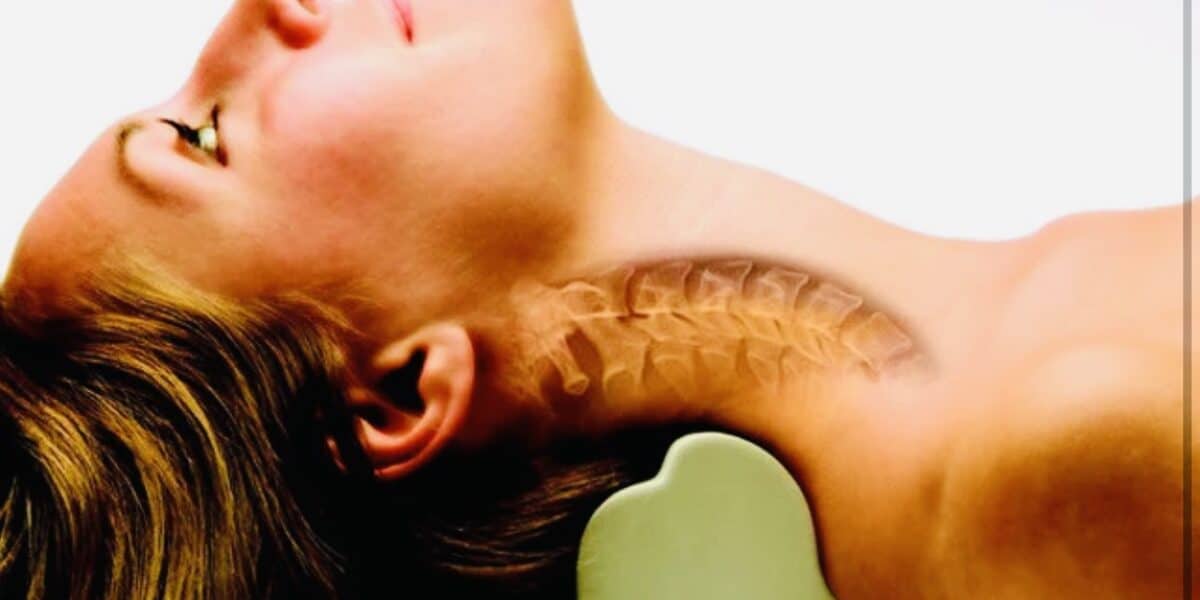
A cervicogenic headache, notable for their origin in the neck, often result from structural issues or dysfunction in the cervical spine.

The neck plays an important role in supporting the head, controlling movement and protecting important nerves. When certain muscles, joints or other structures become irritated, they can sometimes contribute to pain that travels into the head.
One condition associated with this pattern is called a cervicogenic headache. It describes a secondary headache that originates from a problem involving the cervical spine or surrounding structures.
However, it is important to understand that not every headache accompanied by neck discomfort is cervicogenic. Migraine, tension-type headaches and other conditions can produce similar symptoms.
In this guide, we will explore the possible causes of headache and neck pain, how to recognise common symptoms, which exercises may help, and when professional treatment might be worth considering.
Our aim is to help you understand your symptoms and make informed decisions about your health.
What Is the Connection Between Headache and Neck Pain?
Your neck does much more than simply support the weight of your head.
It contains a complex network of muscles, joints, ligaments and nerves that work together to allow you to look up, turn your head, maintain balance and perform everyday activities.
The upper part of the cervical spine also has important neurological connections with the nerves responsible for sensation in the head.
This helps explain why certain problems involving the neck can sometimes be felt as pain in the head.
For example, someone experiencing headache and neck pain may notice that the discomfort begins around the upper neck before spreading towards the back of the skull, temples or forehead.
This pattern can occur with cervicogenic headache, although it is not exclusive to this condition.
Other possible explanations include-
- Tension-type headaches accompanied by muscle discomfort.
- Migraine associated with other stiffness or pain.
- Muscular tenderness around the upper shoulders.
- Certain cervical spine conditions.
- Occipital neuralgia, which involves irritation of the occipital nerves.
- Understanding the difference matters because the most appropriate treatment depends on the underlying cause.
What Is a Cervicogenic Headache?
A cervicogenic headache, notable for their origin in the neck, often result from structural issues or dysfunction in the cervical spine.
Unlike migraine or tension-type headaches, which are primary headache disorders, cervicogenic headache originates from another structure in the body.
The discomfort commonly begins in the upper neck and may spread towards the back of the head, temples or forehead.
People experiencing this condition may notice-
- Pain that starts in the neck and travels towards the head.
- Discomfort that is more noticeable on one side.
- Reduced neck movement.
- Headaches aggravated by certain neck movements.
- Tenderness around the upper neck.
- Pain that sometimes extends towards the shoulder.
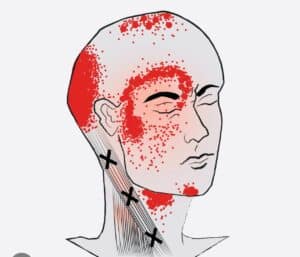
A clinician will consider the pattern of symptoms, examination findings and medical history before diagnosing this condition.
It is important not to self-diagnose based on the location of your headache alone.
Headache at Base of Skull: Symptoms You Should Not Ignore
One particularly uncomfortable type of headache is pain around the point where the neck joins the skull.
A headache at base of skull can feel like pressure, a dull ache, stiffness or sometimes a sharp sensation.
Although this discomfort can occur with cervicogenic headache, it can also be associated with migraine, tension-type headache and other conditions.
Forward Head Posture and Its Connection to Headache
This posture is most commonly predisposed by sitting at the desk and looking at a computer screen, or even any activities which involve looking down, like knitting. Forward headache posture increases stress on the neck (cervical spine) and the surrounding structures including nerves which supply the headache, face, neck pain and shoulders.
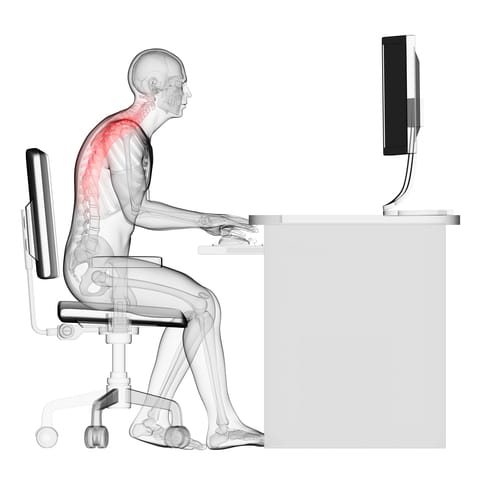
Here are some common symptoms to be aware of.
1. Pain Where the Neck Meets the Skull
- You may experience a persistent ache around the upper neck, just below the back of your head.
- This region contains small muscles and joints that contribute to head movement and stability.
- The discomfort may become more noticeable after prolonged sitting, looking down or maintaining the same position for extended periods.
2. Pain Spreading Towards the Head
- Some people notice that the discomfort begins in the upper neck and gradually travels upwards.
- It may extend towards:
- The back of the skull.
- The temples.
- The forehead.
- The scalp.
- The area behind one eye.
- This referred pain pattern is associated with cervicogenic headache, but other headache disorders can produce overlapping symptoms.
3. Stiffness and Restricted Neck Movement
- Does turning your head feel uncomfortable? Do you find yourself moving your entire upper body rather than simply turning on sides?
- Reduced movement can accompany related discomfort.
- You may particularly notice stiffness when looking upwards, turning sideways or maintaining a downward position for too long.
4. Shoulder and Upper Back Tightness
- The neck and shoulders work together to support your head and control movement.
- Muscles that may become uncomfortable or overworked include:
- Upper trapezius.
- Levator scapulae.
- Suboccipital muscles.
- Scalene muscles.
- Pectoral muscles.
- When these structures become sensitive, they may contribute to discomfort around the shoulders and upper back.
5. Discomfort After Working at a Computer
- Some people notice that their symptoms become worse towards the end of the working day.
- Long periods of sitting, limited movement and repetitive activities can contribute to discomfort.
- If you regularly experience headache and other pain after working at a desk, it may be helpful to review your workstation and daily movement habits.
The Upper Cross Syndrome
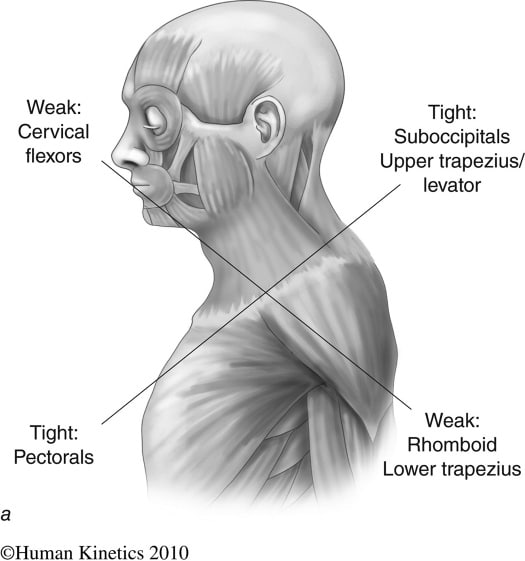
To help manage forward head posture, the body creates a muscle imbalance known as the upper cross syndrome, which is caused by the weakening and lengthening of the posterior (behind) upper back pain, combined with the tightening and shortening of the opposing anterior (front) pectoral (chest).
Cervicogenic Headache Exercises
One can manage and prevent cervicogenic headache with pain and exercises enhancing neck pain strength, flexibility, and posture. Here are our recommendations –
Muscle Stretching
Chin Tucks– Sit/stand straight, gently tuck chin towards chest, hold 5-10 sec, repeat 5-10 times.
Neck Rotation– Slowly turn head to right, chin over shoulder, hold 15-30 sec, repeat on left. Do 3-5 times each side.
Isometric Neck Exercises– Press hand on forehead, side, back, hold 5-10 sec. Repeat 5-10 times each. These exercises will target several and chest muscles at once.
Diaphragmatic Breathing– Inhale deeply through nose, expand abdomen, exhale slowly through mouth. Focus on breath for relaxation.
First Rib, Neck Pain & Shoulder Release Exercise
Tension around the first rib, upper trapezius and other muscles can contribute to headache, shoulder tightness and restricted movement. When these muscles and surrounding structures become stiff, tight or overactive, they can place additional strain on the cervical spine and nearby nerves, potentially triggering a headache at the base of the skull, recurring headache and discomfort that spreads towards the shoulders. This type of muscle tension may also contribute to cervicogenic headache, where pain originates and is felt in the head.
Incorporating gentle mobility exercises and targeted muscle-release techniques into your daily routine may help reduce neck tension, improve posture and support headache relief. With consistent practice, these exercises may also help ease headache frequency and intensity, improve neck movement and reduce the muscle strain that can contribute to recurring headache.
Watch our guided exercise here – severe headache base of skull
Posture Correction
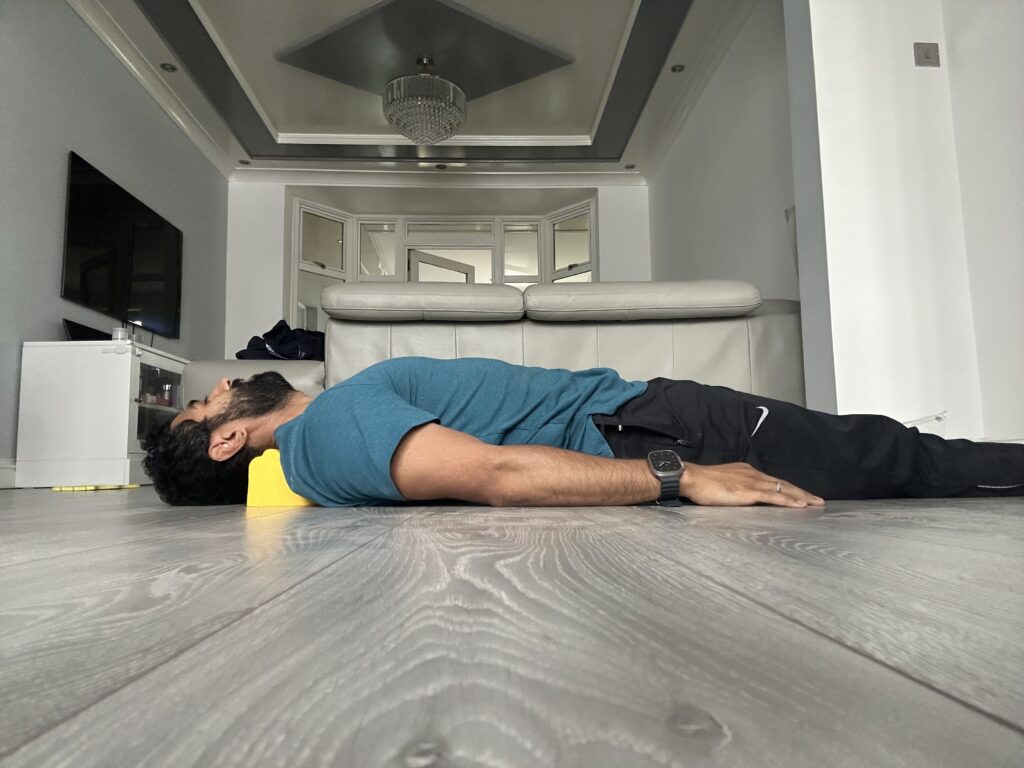
This therapy uses a device (image below) to self-manage focused stretching of the spine and the surrounding tissues. Spine traction is a highly effective way to Improve neck curve and alleviate upper back pain and neck tension. This therapy is ideal for those with a straight with a flexed upper back and severe neck pain and headache base of skull- which, are both the outcomes of stiffness in the spine and tension in flexors of the trapezius muscle pain.
Headache and Neck Pain Treatment: What Professional Options Are Available?
When symptoms keep returning, interfere with your sleep or make everyday activities difficult, it may be time to seek professional advice.
The most suitable treatment treatment depends on the underlying cause, your medical history and the findings of an assessment.
Several approaches may be considered.
1. Chiropractic Care
Chiropractors assess and manage certain musculoskeletal conditions involving the spine, joints and surrounding structures.
Depending on your symptoms and assessment, treatment may include-
- Joint mobilisation.
- Appropriate manual therapy.
- Soft-tissue techniques.
- Therapeutic exercises.
- Movement and activity advice.
If your headache and neck pain appear to be associated with a musculoskeletal problem, an assessment may help establish whether chiropractic care is appropriate.
At Back to Health Wellness, you can learn more about the clinic’s approach through its Chiropractor Surrey service.
The page provides information about chiropractic care in Surrey and the services available at the clinic.
If you are considering headache treatment, you can contact the practice to discuss your symptoms and whether an appointment is suitable.
It is important to understand that cervical spinal manipulation is not appropriate for everyone and carries rare but potentially serious risks. Discuss the benefits, risks and alternatives with your practitioner before proceeding.
2. Osteopathy and Manual Therapy
Osteopathy involves assessing and managing headache problems affecting the musculoskeletal system.
Depending on your individual circumstances, an osteopath may consider-
- Gentle joint mobilisation.
- Soft-tissue techniques.
- Movement exercises.
- Advice on everyday activities.
- Strategies to improve mobility and physical function.
Manual therapy may be considered alongside exercise and education where appropriate.
However, treatment should be based on an individual assessment rather than assuming that all headaches originate from the neck.
3. Physiotherapy and Rehabilitation
Physiotherapy can help people experiencing musculoskeletal neck discomfort through an individualised rehabilitation programme.
This may include-
- Deep neck muscle exercises.
- Shoulder and upper-back strengthening.
- Neck mobility exercises.
- Postural and movement advice.
- Gradual return to everyday activities.
For some people, a structured exercise programme can be particularly useful for improving muscle endurance and movement control.
4. Massage Therapy
Massage may help some people experiencing muscular discomfort around the neck, shoulders and upper back.
Depending on the individual and the technique used, it may support relaxation and provide temporary relief from muscle tension.
However, massage does not address every cause of headache and neck pain and should be considered as one possible part of a wider management plan.
Cervicogenic Headache Treatment: Finding the Right Approach
There is no single treatment that works for everyone experiencing cervicogenic headache
The first step is understanding whether the headache is actually coming from the neck or whether another headache condition is responsible.
A healthcare professional may assess your medical history, symptom pattern, neck movement and neurological function.
Depending on the findings, cervicogenic headache treatment may involve-
Targeted exercises: Exercises for the deep neck and shoulder muscles may help improve strength, endurance and movement control.
Manual therapy: Selected manual techniques may be considered alongside an active rehabilitation programme.
Activity modification: Adjusting activities that aggravate symptoms and gradually returning to normal movement may help.
Education: Understanding your symptoms and learning how to manage everyday activities can form an important part of recovery.
Medical management: Some people may require medication, further investigation or referral to another healthcare professional.
The best approach is one that considers the individual rather than relying on a standard treatment for everyone.

How Back to Health Wellness Can Help You Take the Next Step
When you have been experiencing recurring discomfort, it is natural to want to understand what is happening and what you can do about it.
Rather than simply trying different treatments without knowing the possible cause, an appropriate assessment can help you make a more informed decision.
Back to Health Wellness provides information about its chiropractic services and assessment approach for people experiencing musculoskeletal problems.
If you are also experiencing back discomfort alongside your other symptoms, you may wish to explore the clinic’s Fix Spine Pain in Two Steps programme
The programme page explains its consultation and follow-up approach for people seeking help with back pain and spinal concerns.
If your main concern is headache and neck pain, contact the practice first to confirm whether the programme or a different appointment is more appropriate for your symptoms.
A suitable treatment plan should always reflect your individual assessment, medical history and needs.