
By Sumaiya Farheen and Andrew Siyabalawatte, September 2026.
If you’ve been researching ways to stretch or decompress your back at home, you’ve probably come across back stretchers, home spinal decompression machines and different types of back decompression devices. Although they can sound similar, they can work in quite different ways.
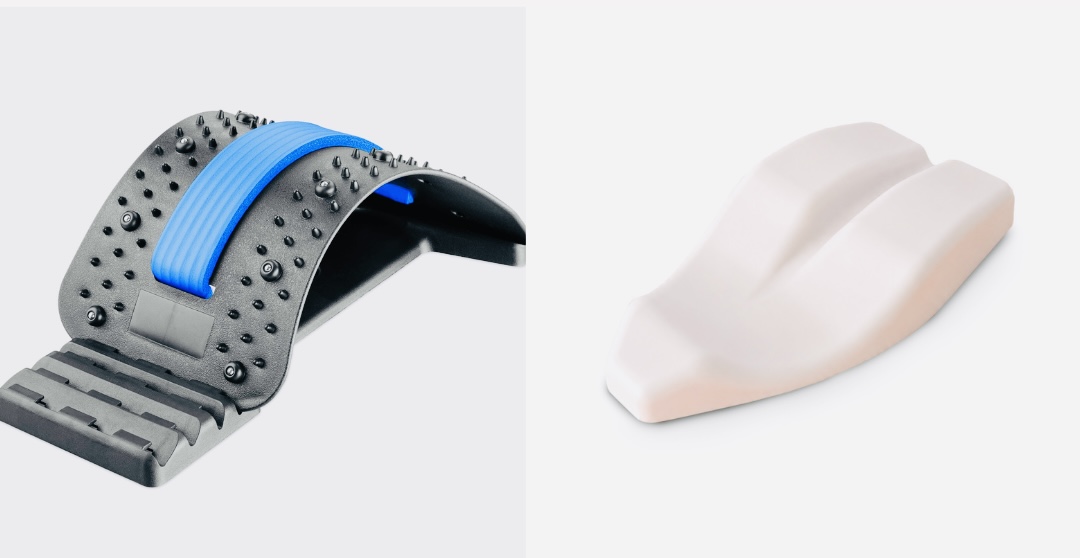
Some back stretchers use large, curved arches that support your back as you lie over them. Others use firm pressure points to target the muscles.
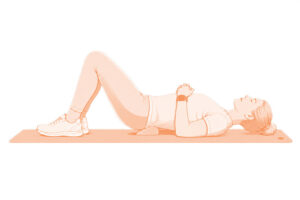
The Backaid device takes a more targeted approach.
It isn’t trying to stretch your entire spine.
Instead, it focuses on a very specific area:
The last few lumbar vertebrae, the pelvis and the tailbone.
This is the area where the lower spine meets the pelvis and where many people describe feeling stiffness, tension or discomfort. Why? well it is the area where MOST of the LOAD occurs in the spine.
Therefore, rather than placing a large arch underneath your back, the backaid device targets the lower back with focused decompression where you need it most.
This allows you to gently change the position of your pelvis and lower back without having to force yourself into a deep stretch.
Research suggests that the relationship between stretching and the position of the spine and pelvis isn’t always as straightforward as it may seem. You can read the full research here.
Doe a back stretcher actually work?
They can be very useful, however it is our belief that the way you stretch your back should be controlled by YOU.
This is why we developed the Backaid device by Spinealign.
This product was not designed to put deep pressure through your back or force your spine into a strong stretch.
Instead, it provides targeted back stretching and decompression around the lower lumbar area, by assisting the pelvis and tailbone position. This is all achieved, whilst encouraging the body to relax.
This approach is what makes ALL the difference.
What is a back stretcher?
A back stretcher is generally a device that helps you change the position of your back to create some form of stretching or relief.
But there’s a big difference between simply stretching the back and putting a lot of pressure through it.
If you’ve ever tried a hard, curved back stretcher, you may know the feeling. You lie back over it and immediately feel a strong stretch.
For some people, that can feel good. For others, particularly when the back is already tense or uncomfortable, a strong stretch can feel like too much.
Your body can naturally respond by tightening the muscles around the area. That’s where our approach with Backaid is different. It takes a more targeted approach by focusing on a very specific area – the last few lumbar vertebrae, the pelvis and the tailbone.
Rather than placing a large arch underneath your whole back, it is designed to provide targeted decompression by gently assisting the position of your pelvis and lower back without having to force yourself into a deep stretch.
BackAid is about relaxation, not deep pressure. This is one of the biggest differences between our Backaid product and many other back stretching products.
Some back stretchers are deliberately firm and use pressure points, raised sections or pronounced curves.
That approach may feel satisfying to some people.
But it isn’t necessarily what everyone wants from a back-care device.
BackAid is based on a different principle–
Help the body relax into a state it can unload unnecessary tension.
It encourages slow, comfortable breathing to consciously relax the muscles on the device.
The goal isn’t to fight the stretch.
It is to let your body settle.
This is something we see time and again in our practice: when the body is uncomfortable, the surrounding muscles can naturally tense and protect the area, which can sometimes leave you caught in a cycle of tension and discomfort.
Instead, our Backaid is a non-invasive home tool designed around positioning, gentle stretching, relaxation and awareness of the lower back and pelvis.
Why target the pelvis and tailbone?
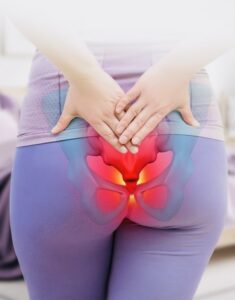
When people think about back pain, they often think only about the lumbar spine.
Though, one shouldn’t forget the pelvis is the absolute centre of our body’s weight distribution, acting as the main connector between the upper and lower body.
The lumbar spine, pelvis, hips and surrounding muscles work together whenever you sit, stand, walk, bend or lift.
The tailbone, or coccyx, sits at the base of this structure and is connected to our hips with surrounding muscles (pelvic floor) and soft tissues.
For some people, the sensation they experience may be more around the top of the pelvis, sometimes described as iliac crest discomfort.
For others, it may be lower back stiffness, hip tension or discomfort around the base of the spine.
Understanding where the discomfort comes from is important.
You can learn more about this in our guide to iliac crest pain, its possible causes and how our device may help.
Back stretcher vs Backaid: what’s the difference?
| Traditional back stretcher | BackAid |
| Often uses a pronounced curved shape | Targets pelvic positioning |
| May create a larger spinal stretch | Focuses specifically on the lower lumbar/pelvic region |
| Some products use pressure points | Relief can be achieved in under than 5 mins |
| Often aims to stretch the back | Gently encourages stretching and relaxation |
| May encourage a strong extension position | Highly portable, fits into most items of baggage |
| Generic lower-back approach | Mobilises the lower lumbar, pelvis and tailbone |
This doesn’t mean that every traditional back stretcher is bad or that the Backaid is suitable for everyone.
It simply means they are different approaches.
The right choice depends on what you are trying to achieve and how your body responds.
Why we don’t believe deeper pressure is necessarily better
There are plenty of products that use firm pressure points or a pronounced arch.
And we know that some people like that feeling.
But we’ve taken a different view.
If your back is already holding tension, putting more and more pressure through it isn’t necessarily going to make you relax.
Sometimes it can make you brace against the pressure instead.
Think about what happens when someone pushes hard into a sore area. Your first instinct is often to tense up.
That’s not the experience we wanted the Backaid to create.
Instead, we wanted something that could be used comfortably, where you could lie down, breathe and allow your body to relax rather than trying to force it into a stretch.
How should you use the Backaid?
The most important thing is not to force it.
Position the Backaid device as shown in the instructions and choose the position that feels appropriate for you.
Once you’re comfortable, you will naturally settle. Take some slow breaths and let the magic happen.
If you’d like to understand exactly how Backaid works, including the forward and backward pelvic positions and how to incorporate it into your routine, read our full guide at
The BackAid Device for Back and Leg Relief
In our opinion, back care isn’t about finding the strongest stretch, it’s about finding the position in which your body can finally relax and destress from the daily grind of life.
Back Stretcher vs Spinal Decompression Machine – Are They the Same?
Not necessarily.
If you’ve been researching ways to stretch or decompress your back at home, you’ve probably come across both back stretchers and spinal decompression machines. Although they can sound similar, they can work in quite different ways.
The easiest way to understand the difference is to look at what each is designed to do
A spinal decompression device can mean very different things depending on the design. Some devices use mechanical traction, while others focus more on positioning and allowing the body to relax. This is why it is worth looking beyond the label and understanding how the device actually works.
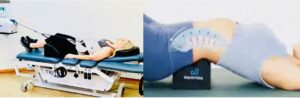
| Feature | Spinal Decompression Machine | Back Stretcher |
| Main approach | May use controlled stretching, positioning or traction | Targeted positioning and generic stretching |
| Area of focus | Can be designed to address a larger area of the spine | Targets several areas of the spine |
| Mechanical traction | Some machines use mechanical traction | No mechanical pulling, device and bodyweight with gravity assisting |
| Motors / weights | Some systems may use motors, weights or other mechanisms | No motors, weights or complicated controls |
| How it feels | Can provide a strong, mechanical stretch | Designed to encourage a strong stretch |
| Pressure | Depends on the type of machine and how it operates | Designed to provide deep pressure |
| Positioning | Often uses controlled positioning of the body | Several positions of use |
| Designed for home use | Some systems are larger and less portable | Compact and designed for simple home use |
| Overall approach | A strong approach, professional guidance advised. | A well-rounded approach, no professional guidance necessary |
What about disc space narrowing and osteophytes?
People researching spinal decompression often come across terms such as disc space narrowing and osteophytes.
Disc space narrowing generally refers to a reduction in the space between the vertebrae, which can occur with changes to the spinal discs over time.
An osteophyte is a bony growth that can develop around a joint or the edges of a vertebra, often in association with degenerative changes.
These terms are worth understanding, but seeing them on a scan does not automatically mean that a particular stretching or decompression device is appropriate for you.
The cause of your symptoms and your individual circumstances matter. If you have persistent or significant symptoms, professional assessment is important.
How does Backaid compare to the Denneroll (traction) Orthotic?
I have done traction on a denneroll for over 10 years – I’ve benefitted from it, it is based on evidence, a model of care to improve posture for the better and manage or prevent degeneration in our spine. Though for it to work effectively, it is dependant on your body being in a “normal” state and not if/when experiencing acute pain/or muscle spasms.
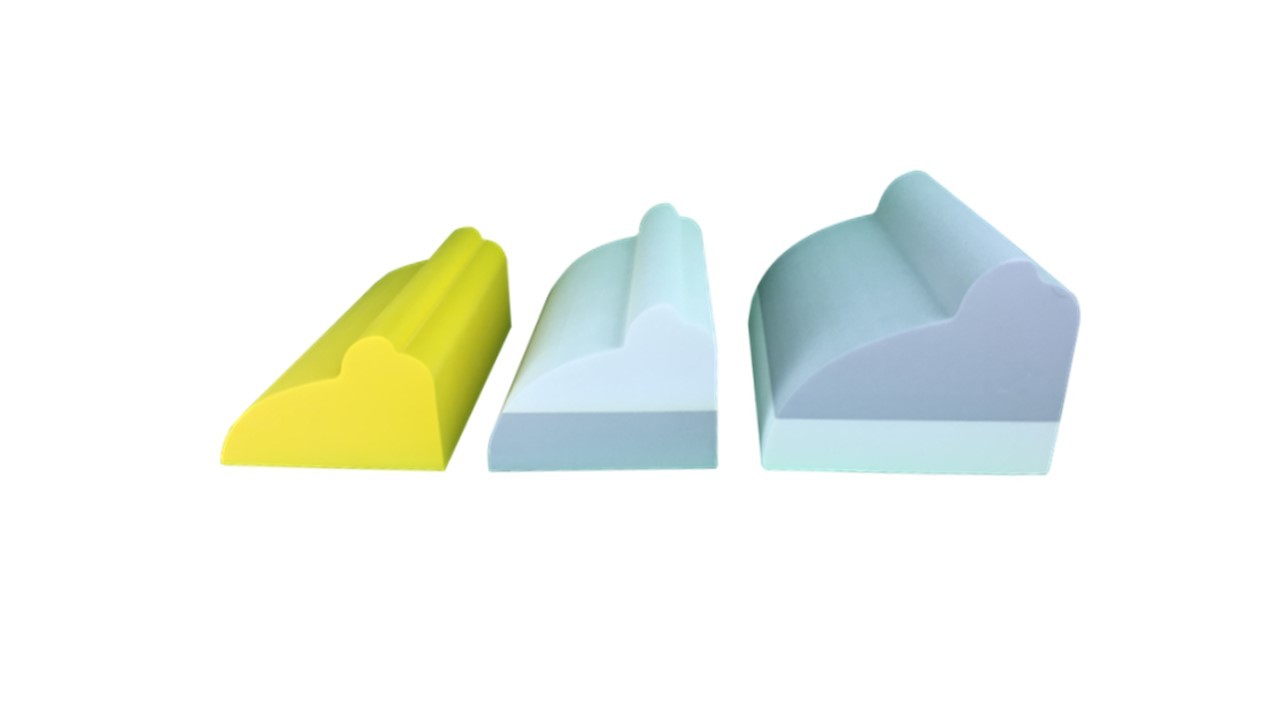
The backaid on the other hand, is not designed to correct spinal postures – it’s designed to assist with posture improvement by simply giving the back a gentle “lift” allowing gravity to do the work. You just decide how and when you want to use it.
It is designed to relieve pain and tension in the spine when you need it. It is designed to be comfortable for your back – and I know I am being biased here, but it IS comfortable. Not too comfortable to feel snug like a memory foam pillow, but enough to feel comfortable for “positive change” to take place without compromise.
The device applies a subtle pressure directly to the pelvis and the last couple of vertebrae in the lower spine. Pressure applies to the soft tissues and joints between the tailbone and the pelvis, to promote a therapeutic effect.
This is where the back aid comes to the rescue- it helps you get your back – back to “normal”
The back aid helps RELIEVE stress in the back to help ease tissue tension and prepare the back for traction.
It is best used when you’ve felt you’ve used your body, both physical and/or mentally. It’s the “RESET” before you GO again. It’s not time dependent, though a few minutes and you will experience a noticeable effect in under 5 mins.
Closing Comments
I use mine every day, because I USE my body every day. I’ve experienced and seen too many cases of degeneration and chronic back issues in my 10 years of posture correction to have a strong belief in trying to make change happen. What is the change I am seeking to make? the one thing we don’t do enough – spending more time lying down and relaxing, in order to reset from the daily stress of life so we can go again, without compromising our health.
So my dear community – this is for you, inspired by you. Relax, reset and go again.
It’s time to make “ laying down anywhere, comfortable”
Yours in Health, Andrew.