
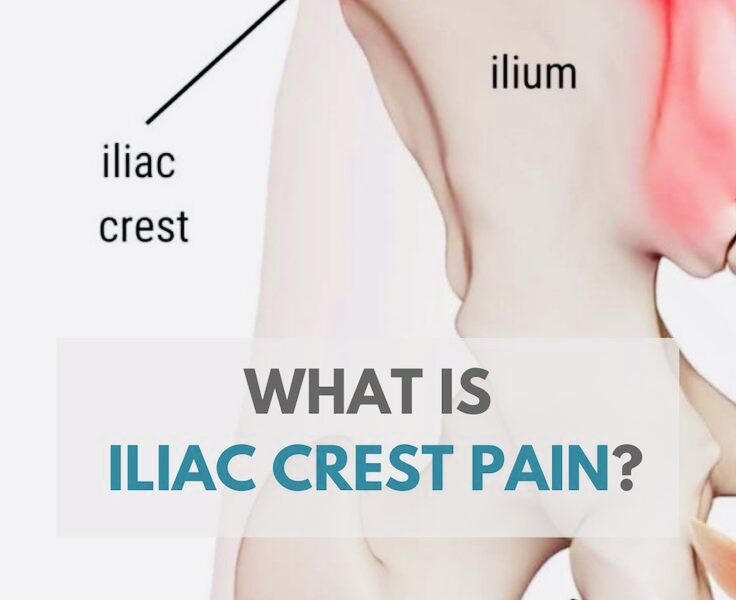
By Sumaiya Farheen, September 2026.
Pain around the top of your hip can be frustrating, especially when you’re not sure what’s causing it.
Iliac crest pain can feel like an ache, tenderness or sharp discomfort along the top of the pelvis, sometimes extending into the lower back, hip or buttock. It can be linked to muscles, ligaments, the sacroiliac region or even the lower back, so the painful spot isn’t always the actual source.
And because so many muscles, joints, ligaments and other structures meet around this area, it is not always obvious where the pain is actually coming from.
Sometimes the problem is muscular. Sometimes it is related to the sacroiliac joint, the lower spine or the tissues around the pelvis. In other cases, irritation of the iliolumbar ligament may contribute.
Although sometimes working directly on the spot that hurts can be effective, it is almost always more important to understand the possible causes of pain around the iliac crest in the first place.
At Back to Health Wellness, we take this wider view. The way your spine, pelvis, hips, muscles and posture work together can influence how load is distributed through your lower back and pelvis. Our approach is therefore focused on understanding movement and helping people develop better mobility, strength and posture awareness rather than promising a quick fix.
And for some people, a simple tool such as the Backaid Device may have a useful role within that wider approach.
Let’s take a closer look.
What Is the Iliac Crest?
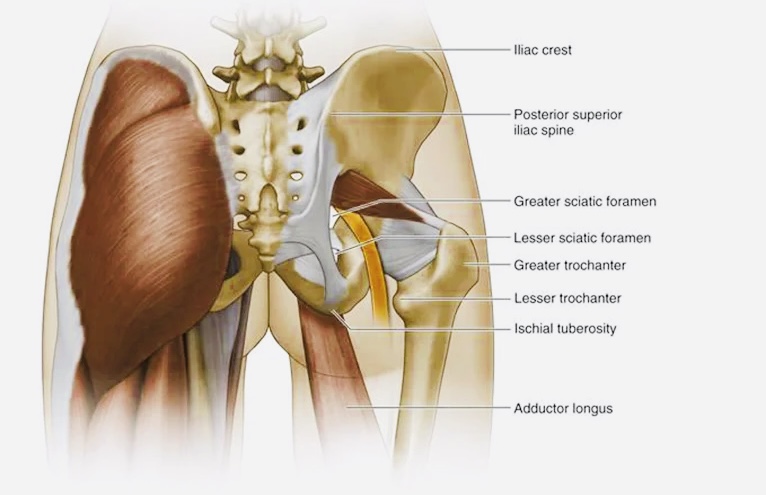
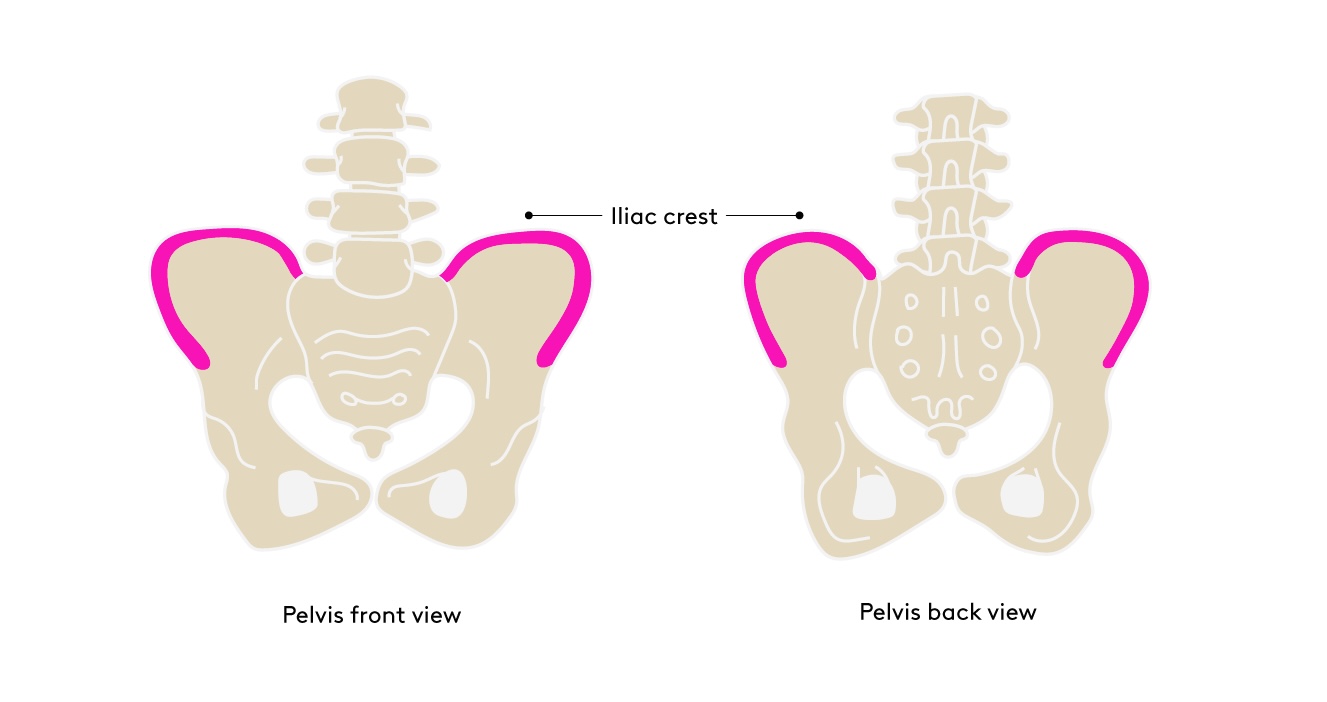
The iliac crest is the curved upper border of the ilium, which forms a large part of your pelvis. If you put your hands on your waist and feel for the hard ridge underneath your skin, you are likely feeling your iliac crest.
The ilium is one of the main bones that makes up the pelvis. Because of this, ilium pain, sometimes described as ilium bone pain, can be felt around the upper part of the pelvis, lower back, hip or buttock.
The iliac crest is much more than simply a bony landmark. It provides attachment points for several iliac crest muscles and connective tissues involved in movement and stability of the-
- Lower back
- Abdominal wall
- Hips
- Pelvis
- Core
- Spine
This is one reason iliac crest pain can sometimes be difficult to pinpoint. Pain that feels as though it is coming directly from the hip bone may actually involve the surrounding muscles, ligaments, sacroiliac region or lower spine.
What Does Iliac Crest Pain Feel Like?
There isn’t one single description of iliac crest pain.
Some people describe a very specific tender spot along the top of the pelvis. Others experience a broader ache across one side of the lower back and hip.
You might notice-
- Aching over the top of the hip bone
- Tenderness when pressing along the iliac crest
- One-sided lower back discomfort
- Pain around the waist or pelvic rim
- Tightness through the lower back or hip
- Pain when bending or twisting
- Discomfort when walking or standing
- Pain when getting up from a chair
- Discomfort when climbing stairs
- Pain when lying on one side
- Symptoms extending towards the buttock or hip
The pattern matters.
For example, pain that appeared immediately after a direct blow to the hip is different from pain that gradually developed after weeks of sitting, lifting or repetitive movement.
Likewise, pain around the iliac crest accompanied by numbness, tingling or weakness may point towards involvement of the lower back or nerves rather than a simple local muscle problem.
Iliac Crest, Ilium and Sacrum: What’s the Difference?
| Structure / Term | What it is | Where it is | How it relates to pain |
| Iliac crest | The curved upper border of the ilium | At the top of the pelvis, around the waist/hip area | Pain may be felt directly over the top of the pelvis or around the lower back and hip |
| Ilium | One of the main bones that forms the pelvis | Forms the large side portion of the pelvis | Ilium pain or ilium bone pain may be felt around the hip, pelvic rim, lower back or buttock |
| Sacrum | A triangular bone at the base of the spine | Between the two sides of the pelvis and below the lumbar spine | Pain around the sacrum or sacral region may be felt in the lower back, buttocks or back of the pelvis |
The iliac crest, ilium and sacrum work together with the surrounding muscles, ligaments and joints to help connect the lower spine and pelvis. Therefore, the location of pain alone does not always identify the structure responsible.
Iliac Crest Pain Causes: Where Could the Pain Be Coming From?
There are several possible causes of iliac crest pain, and they can involve the muscles, ligaments, joints, pelvis or lower spine.
Iliac Crest Pain Syndrome
The term iliac crest pain syndrome is sometimes used to describe pain arising around the iliac crest, particularly when symptoms are associated with the structures attaching to or surrounding this area.
Possible contributing factors include irritation of the iliolumbar ligament, muscular tension, repetitive loading and mechanical problems affecting the lower back and pelvis.
However, iliac crest pain syndrome is not the only possible explanation for pain around the iliac crest. A proper assessment is important when symptoms persist or are difficult to explain.
1. Iliolumbar Ligament Irritation
The iliolumbar ligament connects the lower lumbar spine with the pelvis and contributes to stability around this region.
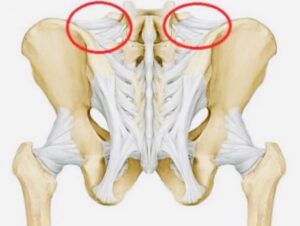
Irritation in this area can produce pain close to the back of the iliac crest and may be felt alongside lower-back discomfort.
Repetitive bending, twisting, lifting or other mechanical stresses may contribute in some people.
This is one reason the term iliac crest pain syndrome is sometimes used when describing pain around this region.
However, it is worth remembering that iliac crest pain syndrome is not the only explanation for pain around the pelvis.
2. Muscle Strain and Tension
The muscles surrounding your lower back, abdomen, hips and pelvis all interact around the iliac crest.
A sudden increase in exercise, lifting, twisting, sport or repetitive movement can overload these tissues.
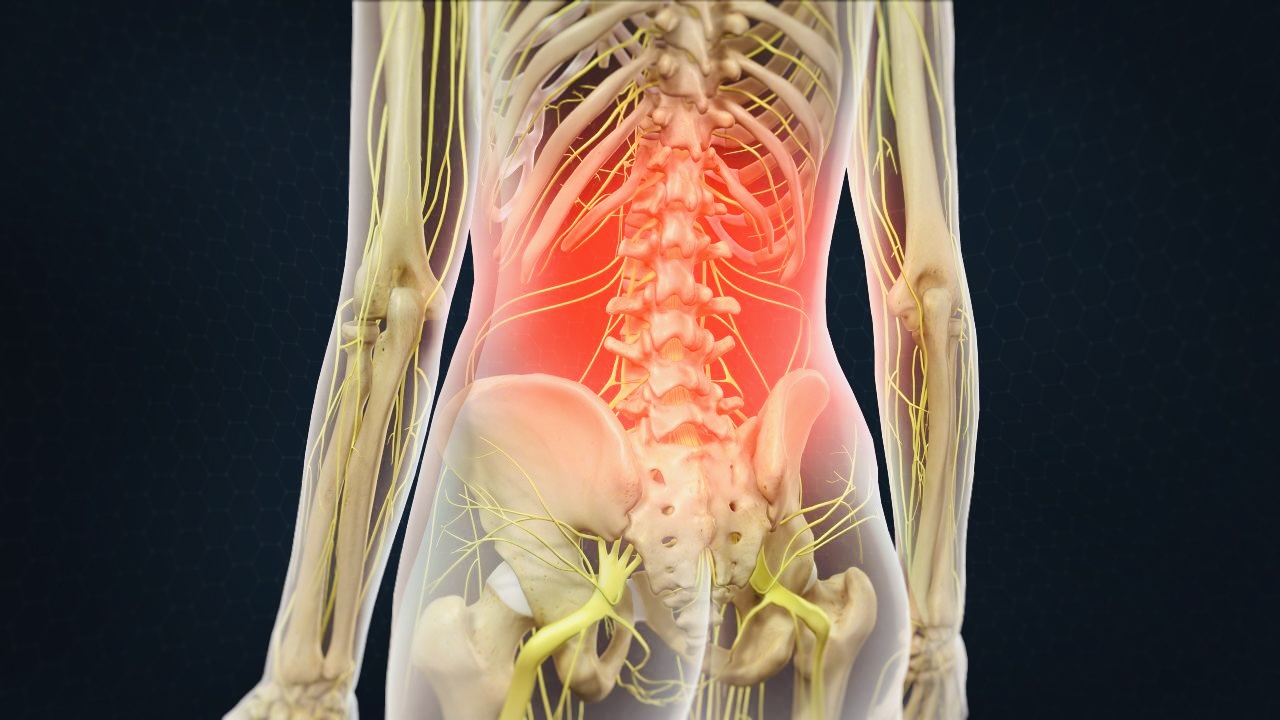
Muscular pain is often accompanied by
- Tenderness
- Tightness
- Stiffness
- Reduced movement
- Pain that changes depending on activity
Sometimes the simplest explanation is that the tissues around the pelvis have simply been asked to do more than they were prepared for.
Sacrum and Sacral Region
The sacrum is the triangular bone at the base of the spine. It connects with the pelvis through the sacroiliac joints.
Because the iliac crest, ilium and sacrum are closely connected through the pelvis and surrounding tissues, discomfort in this region can sometimes be felt across the lower back, buttock or pelvic area rather than at one clearly defined point.
This is why identifying the precise source of pain can sometimes require looking at how the lower back, pelvis, hips and surrounding muscles are moving together.
Posterior Iliac Crest Pain
Pain towards the back of the iliac crest can have several possible causes.
For example, symptoms may involve the iliolumbar ligament, muscles around the lower back and pelvis, the sacroiliac region or structures within the lumbar spine.
If your pain is specifically located around the posterior iliac crest, particularly if it persists or is associated with symptoms travelling into the buttock or leg, an appropriate assessment can help determine what may be contributing to it.
3. Sacroiliac Joint Irritation
Your sacroiliac joints sit between the sacrum and pelvis.
They help transfer forces between your upper body and legs and are closely connected to the structures around the iliac crest.
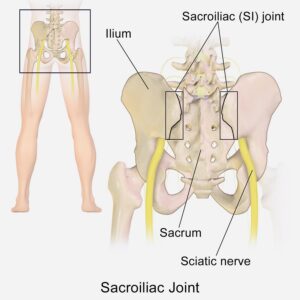
Pain from this region may be felt around the lower back, buttock, hip or pelvis rather than directly over the joint itself.
This is why pain around the “hip bone” does not necessarily mean the hip joint itself is the problem.
4. A Direct Blow to the Iliac Crest
A fall, collision or sporting impact can bruise the tissues around the iliac crest.
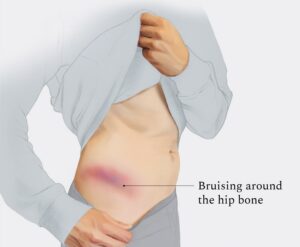
This can be particularly tender to touch and may be accompanied by bruising or swelling.
If your pain started after significant trauma, it is sensible to have the injury assessed rather than assuming it is simply a muscle strain.
5. Lower Back and Pelvic Movement Problems
Your lower back and pelvis don’t operate independently.
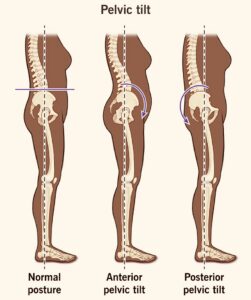
If your lumbar spine becomes stiff, your pelvis may adapt its movement. Likewise, changes in pelvic movement can alter how your lower back and hips handle everyday loads.
This doesn’t necessarily mean that your posture is “wrong”.
There is no single position that everybody needs to hold all day.
Rather, it is often the combination of how you move, how long you remain in one position and how well your body can adapt to different demands that matters.
6. Referred Pain From the Lower Spine
Pain felt around the iliac crest can sometimes originate from structures within or around the lumbar spine.
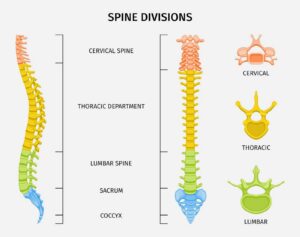
This becomes particularly important when symptoms extend into the buttock or leg or are accompanied by neurological symptoms.
If your lower back pain travels down your legs, our guide to lower back pain that radiates down both legs and hips explores some of the different reasons this can happen.
7. Changes During Pregnancy or After Pregnancy
Pregnancy changes the loads placed through the spine and pelvis.
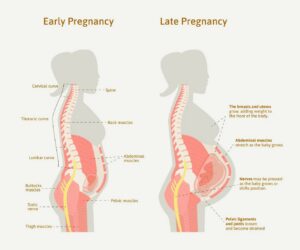
As the body adapts to these changes, some people experience discomfort around the lower back, hips and pelvic region.
Persistent or significant pregnancy-related pelvic pain should be assessed by an appropriate healthcare professional.
Iliac Crest Pain and Posture: Is Your Posture Really the Problem?
Posture gets blamed for an enormous amount of back and pelvic pain.
But the reality is more nuanced.
There isn’t one perfect sitting position you have to maintain from morning until night.
Instead, your body needs to be capable of moving between positions and handling the demands you place upon it.
Think about sitting for several hours.
The issue may not necessarily be that you’re sitting in the “wrong” position. It may simply be that you’re not changing position often enough.
Similarly, someone who repeatedly lifts, twists or plays sport may not need to avoid those activities forever.
They may need to gradually improve their strength, movement capacity and tolerance instead.
This fits with our wider approach on helping people understand posture and movement while developing practical strategies to improve flexibility and build strength.
What Can You Do for Iliac Crest Pain?
The right approach depends on what’s causing the pain. If:-
- A particular activity has overloaded the area, modifying that activity may help.
- Stiffness is contributing, gentle mobility may be useful.
- Weakness or reduced movement capacity is part of the problem, progressive strengthening may have a role.
Despite trying the above, symptoms may still persist, therefore it may be worth a visit to a professional who can further help you problem solve and assess, therefore improving your outcome.
Maybe your not sure where to begin? Do not worry, our following four gentle movements can help you get started.
Iliac Crest Pain Exercises: Gentle Movements for the Pelvis and Lower Back
When iliac crest pain is associated with stiffness or tension around the pelvis, lower back or hips, gentle movement may be more helpful than repeatedly stretching the painful area.
These four exercises focus on areas that work closely with the pelvis and lower back. Some can also be performed with the Backaid Device.
As with any exercise, work within a comfortable range. You should feel controlled movement rather than sharp or increasing pain.
1. S.I. Squeeze
The S.I. Squeeze is a simple movement designed to encourage movement around the sacroiliac region, where the pelvis meets the base of the spine.
It can be a useful starting point if your lower back and pelvis feel stiff or restricted.
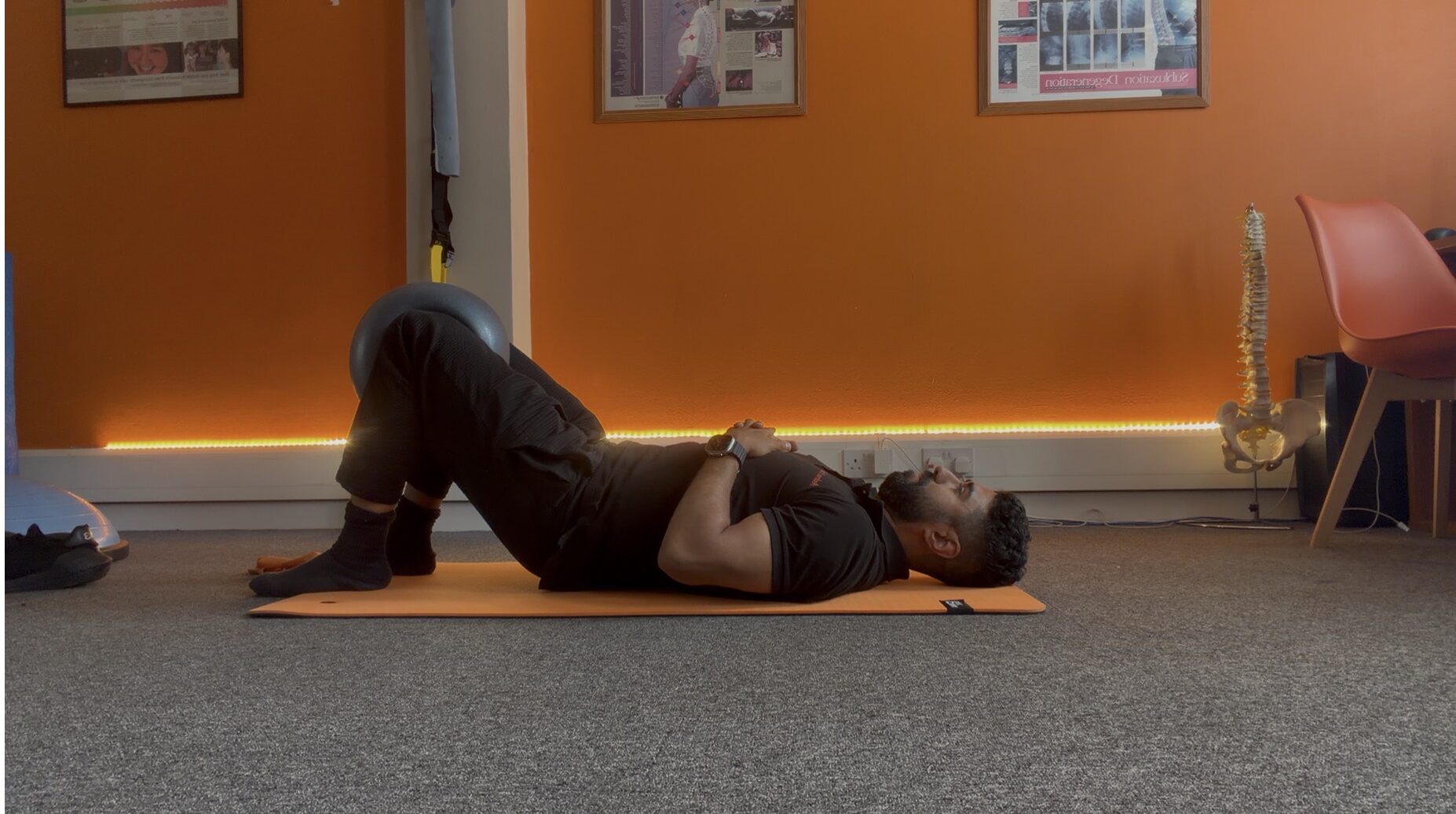
How to do it
- Lie comfortably on your back with your knees bent.
- Place a pillow or cushion between your knees.
- Gently squeeze your knees together to initiate the movement.
- If you want to increase the resistance, you can use a suitable ball instead of a softer cushion.
- Hold the squeeze for around 5 seconds.
- Relax and repeat 10 times.
Keep the movement gentle. There is no benefit in squeezing as hard as possible.
2. S.I. Gapping
Rather than bringing the knees together, you gently move them apart against resistance.
This can encourage activity through the buttocks and outer thigh muscles while allowing you to explore movement around the pelvis.
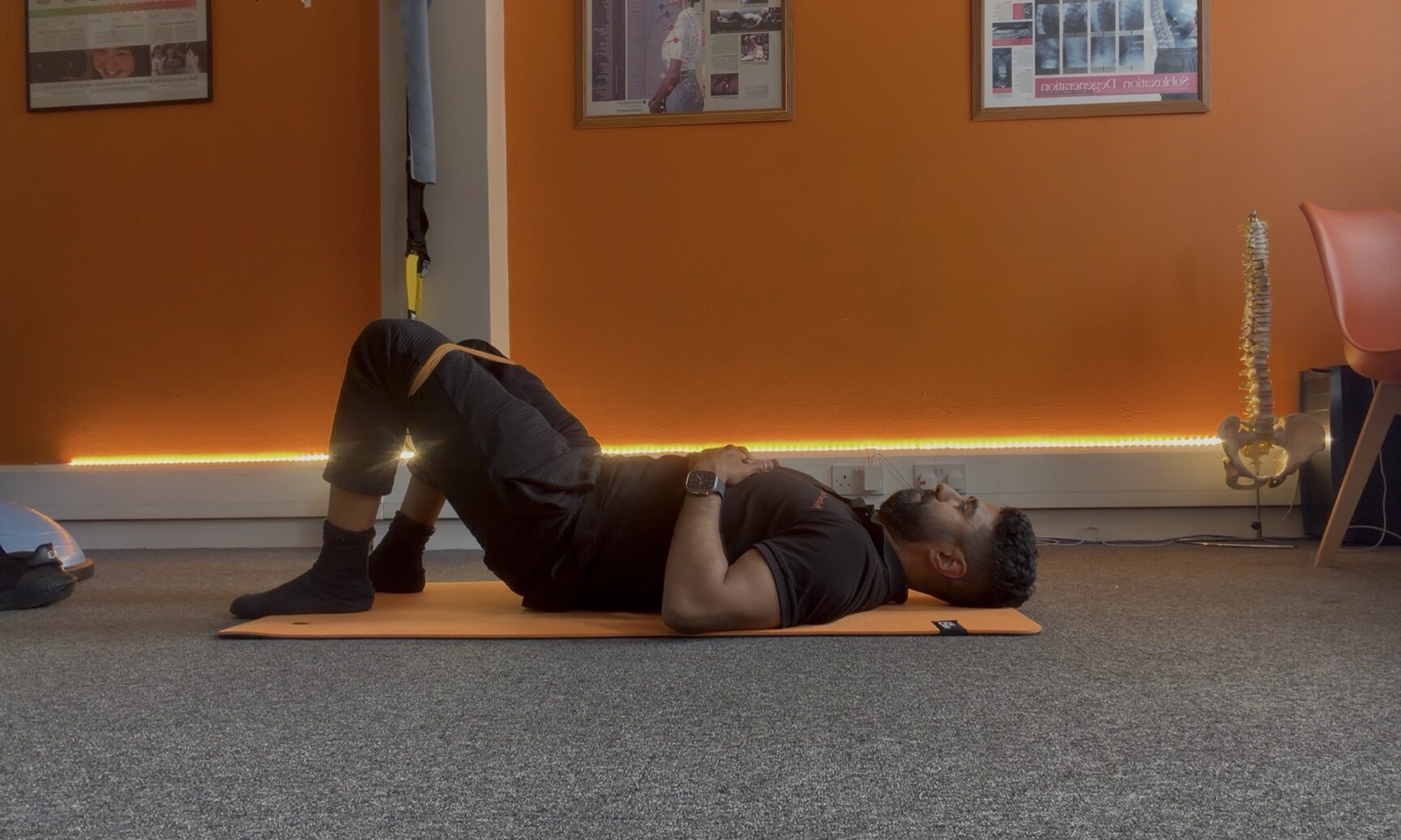
How to do it
- Lie on your back with your knees bent.
- Place a resistance band just above your knees.
- Keep your feet supported and your knees comfortably bent.
- Gently push your knees apart against the resistance.
- You should feel the muscles around your buttocks and outer thighs becoming active.
- Hold for around 5 seconds.
- Relax and repeat 10 times.
Keep the movement controlled rather than forcing your knees as far apart as possible.
3. Shoulder Blade Squeeze
What do your shoulder blades have to do with iliac crest pain?
More than you might initially think.
Your spine, pelvis and upper body work together as part of one movement system. The way you position and move your upper body can influence how you hold and move through your spine and pelvis.
The Shoulder Blade Squeeze is therefore included as part of a broader approach to improving awareness and movement throughout the body.
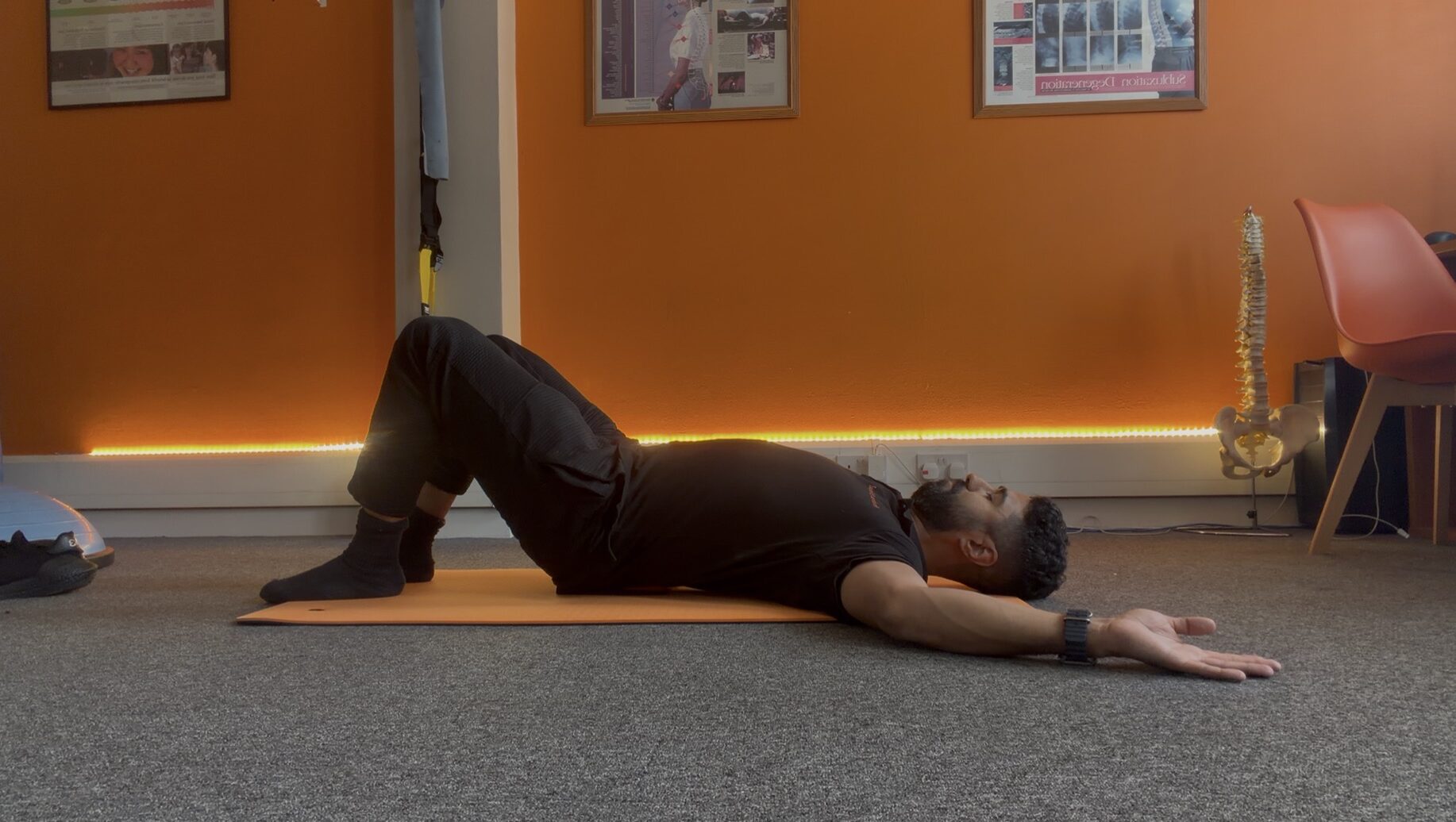
How to do it with the Backaid Device
- Lie on your back on the Backaid Device.
- Position your arms out to the sides at approximately 90 degrees.
- Slowly move through the L, W and Y arm positions.
- As you move, gently squeeze your shoulder blades together.
- Hold for around 5 seconds, continuing to breathe normally.
- Repeat 10 times.
As you become more comfortable with the movement, you can add a gentle press of the back of your head into the floor during the shoulder-blade squeeze phase.
Keep your neck relaxed and avoid forcing your shoulders backwards.
4. Hip Flexion Mobilisation
Your hips play an important role in how your pelvis and lower back move.
When the hips feel stiff, everyday movements such as walking, sitting down, standing up and bending can feel less comfortable.
Gentle hip mobilisation can therefore be a useful addition to a routine for people experiencing stiffness around the lower back and pelvis.
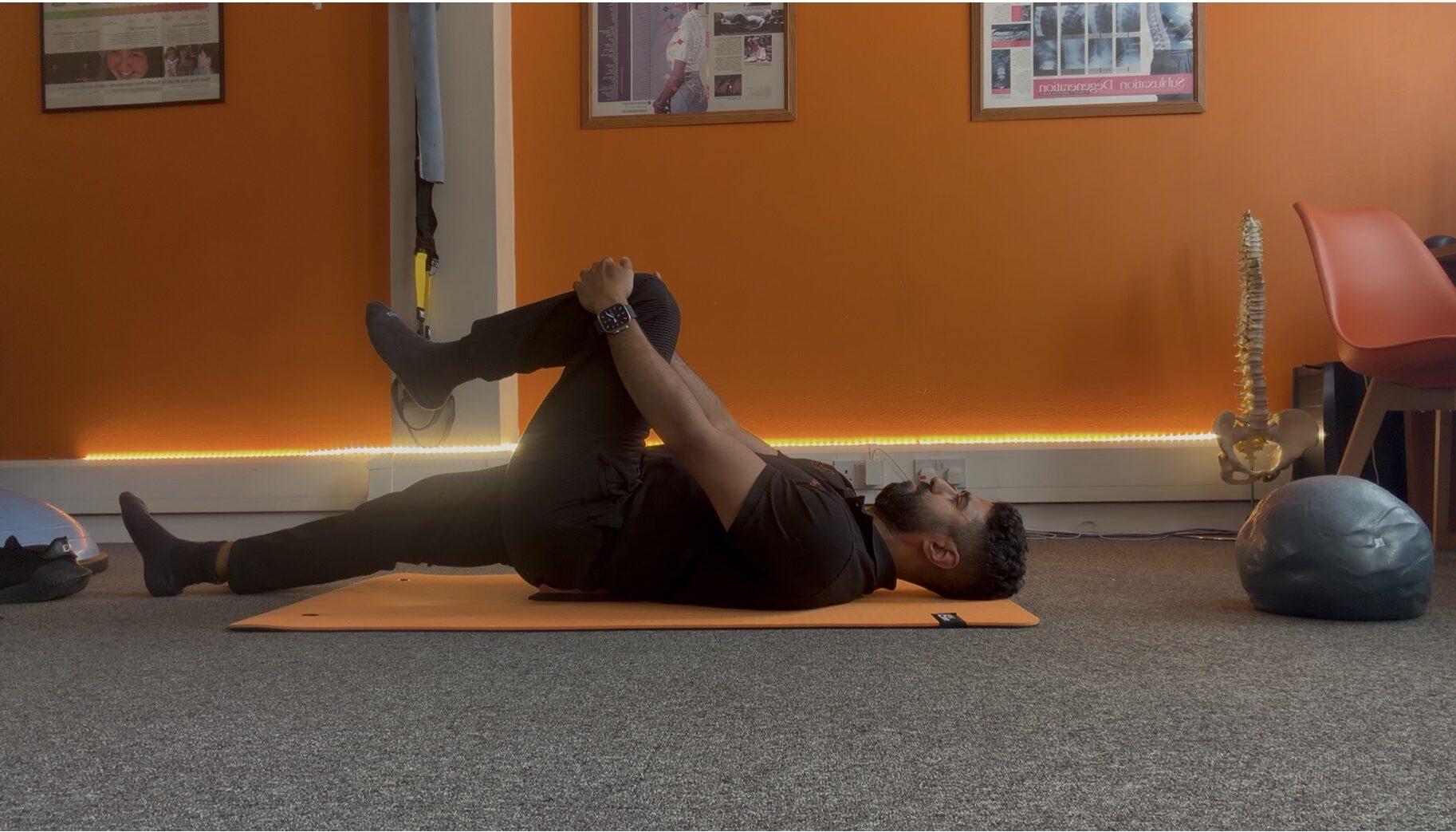
How to do it
- Lie on your back.
- Bring your hip into approximately 90–100 degrees of flexion.
- Place your hands around the leg just below the knee.
- Gently draw your knee towards your chest.
- Move only as far as feels comfortable.
- Return slowly and repeat on the other side.
This should feel like a gentle mobilisation rather than a forceful stretch.
Why These Four Movements Work Well Together
These exercises aren’t designed to attack the painful spot directly.
Instead, they take a broader approach to the areas that contribute to movement around the lower back, pelvis and hips.
The S.I. Squeeze and S.I. Gapping focus on controlled movement and muscular activity around the pelvic region.
Hip Flexion Mobilisation encourages comfortable movement through the hip.
The Shoulder Blade Squeeze brings the upper body into the picture, recognising that movement through the spine and pelvis doesn’t happen in isolation.
And that broader way of thinking is important when you’re dealing with iliac crest pain.
Sometimes the most useful question isn’t-
“How can I stretch the exact place that hurts?”
It is:
“How can I help my back, pelvis and hips move more comfortably together?”
That leads naturally to another question: where does the BackAid Device fit into this approach?
How the Backaid Device Fits Into an Iliac Crest Pain Routine
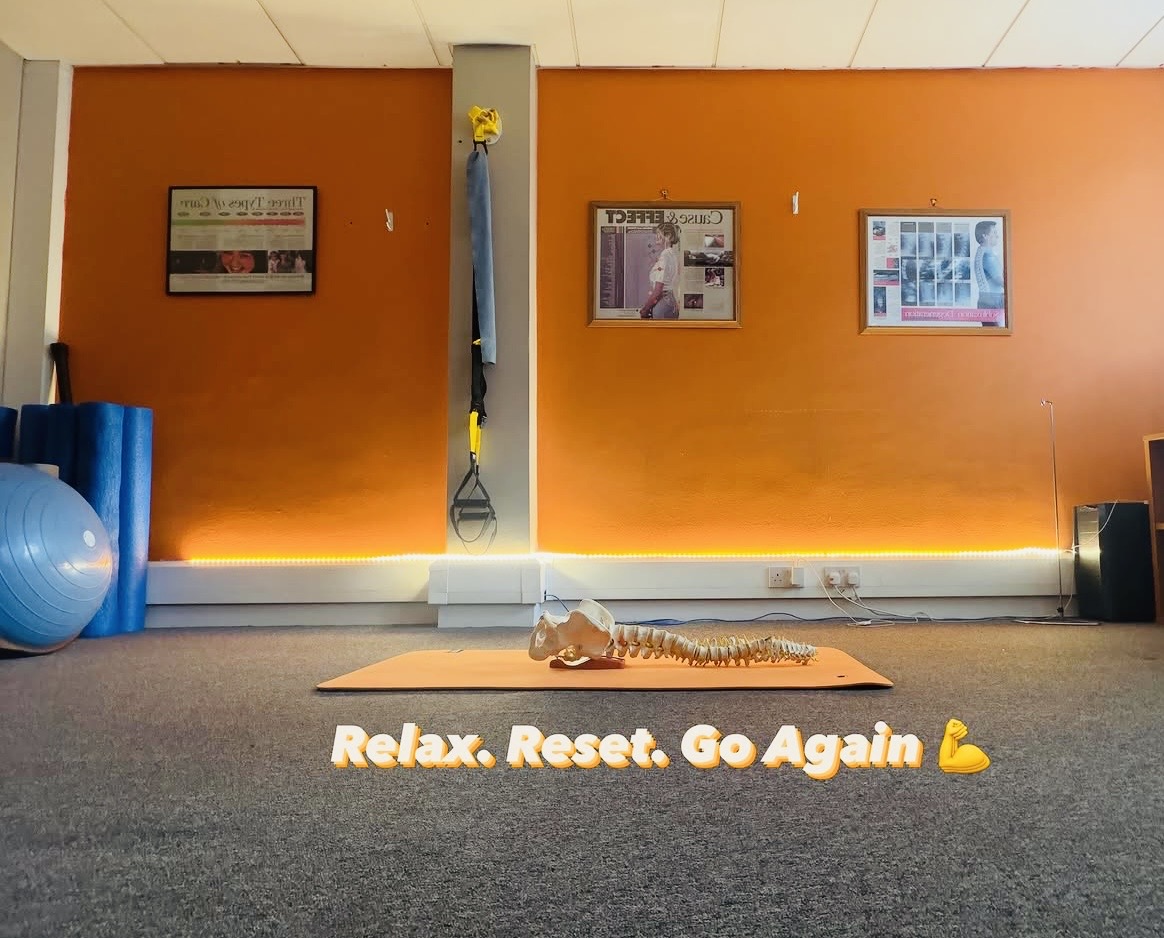
The exercises above introduce gentle movement around the pelvis, hips and spine.
The BackAid Device takes that idea a step further by providing support while you work with movement of the tailbone and pelvis.
Rather than simply pressing directly into the painful area, the BackAid is designed to help you explore different pelvic positions and mobilise the area around the base of the spine.
For some people, that may make it a useful addition to a wider routine that includes-
- Gentle mobility exercises
- Progressive strengthening
- Regular movement
- Posture awareness
- Activity modification
- Appropriate professional guidance
The important point is not to present the backaid as a cure for every type of iliac crest pain.
The Backaid device can be used alongside gentle movement to support comfortable positioning and movement around the lower back and pelvis. If you are interested in seeing how the device can be used to encourage a backward pelvic tilt, the short demonstration below provides a simple visual example.
Watch the Backaid Demonstration – Backward Tilt
The demonstration shows how the Backaid can be incorporated into a gentle movement routine. Use the device comfortably and avoid forcing the movement, particularly if it increases your pain or discomfort.
There are several possible causes of pain in this region, and the appropriate approach depends on what’s actually causing your symptoms.
Instead, think of it as a tool that may support comfortable movement and mobilisation when that approach is appropriate for you.
You can read more about how the Backaid Device for Back and Leg Relief works and how it can be incorporated into a wider back-care routine.
If you’re also interested in the principles behind spinal unloading and mobilisation, you can explore our guide to spinal decompression for back pain.
How Long Does Iliac Crest Pain Take to Improve?
There isn’t a universal recovery time.
A mild muscular irritation may settle relatively quickly, while a more persistent problem involving the lower back, pelvis, joints or surrounding tissues may take longer.
The more useful question is whether things are gradually moving in the right direction.
If your symptoms are becoming easier to manage, your movement is improving and you can slowly return to normal activities, that is generally more encouraging than pain that is continually worsening or repeatedly returning.
If your iliac crest pain has persisted for several weeks without improvement, or keeps coming back, it is worth having the underlying cause assessed rather than repeatedly treating the symptom.
When Should You Get Iliac Crest Pain Assessed?
Not every episode of iliac crest pain requires the same level of attention.
However, professional assessment is particularly important if-
- The pain began after significant trauma.
- Your symptoms are severe or getting worse.
- Pain repeatedly returns without an obvious explanation.
- You experience numbness, tingling or weakness.
- Pain travels down into the leg.
- Pregnancy-related pelvic pain is persistent or significant.
- Your symptoms have continued for several weeks without improvement.
- The goal isn’t to become alarmed by every ache.
A Pelvic Self Mobilisation Technique
Before moving into the individual exercises, it can be helpful to gently mobilise the pelvis. The pelvis and sacroiliac (S.I.) joints play an important role in how the lower back, hips and surrounding muscles move together. A gentle mobilisation technique may help you explore comfortable movement without placing unnecessary strain on the area.
Watch the video below to see a simple pelvic self-mobilisation technique
The movement should feel gentle and controlled rather than forced. Work within a comfortable range and avoid pushing through sharp or worsening pain. Once you have finished, you can move on to the following exercises, starting with the S.I. Squeeze.
It’s to recognise when the pattern suggests that simply treating the painful area yourself may not be enough.
Managing Iliac Crest Pain: Look Beyond the Painful Spot
When you feel pain at the top of your hip, it’s easy to assume the problem is coming from that exact spot.
But sometimes, there’s more going on.
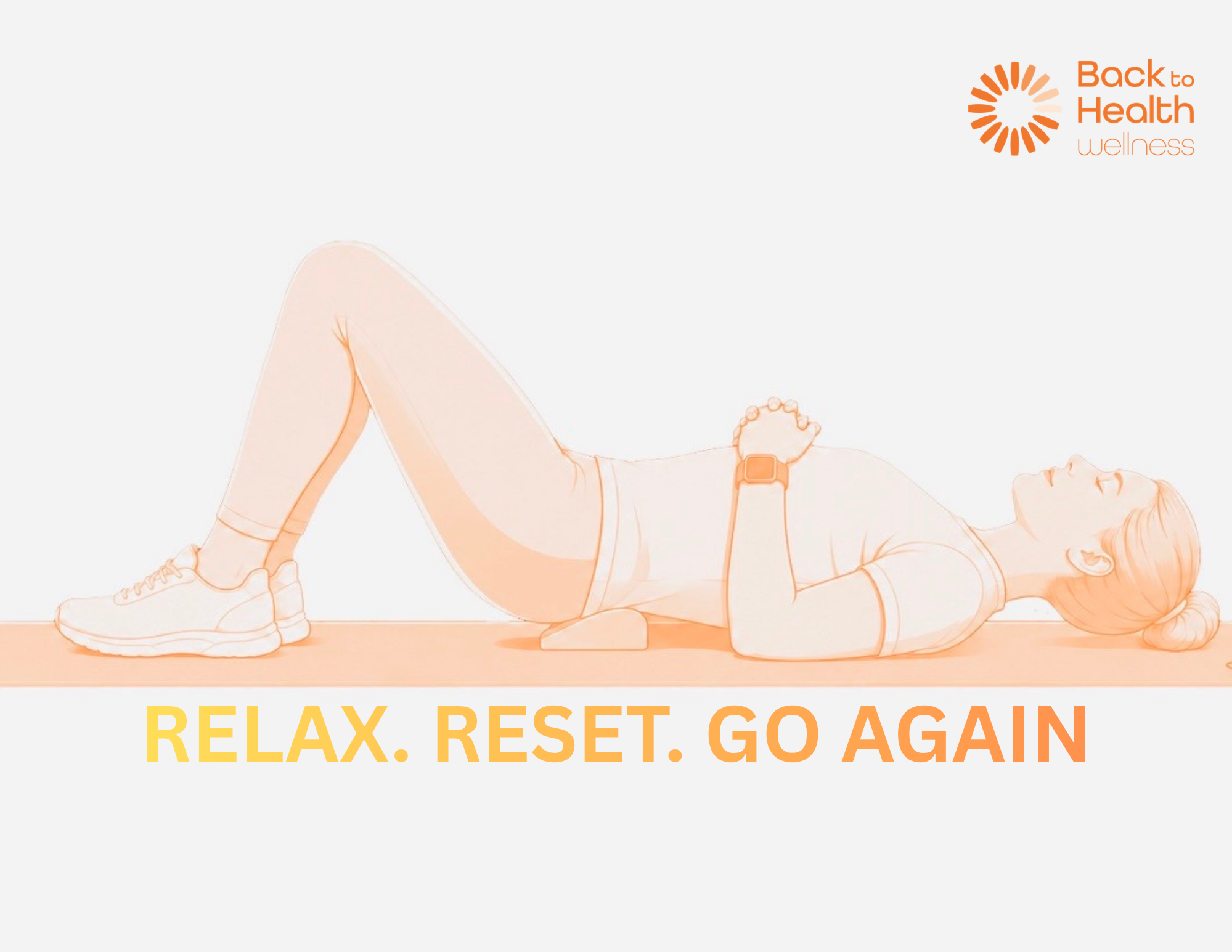
Your lower back, hips, core, glutes and pelvis all work together, so discomfort around the iliac crest can sometimes be connected to how the surrounding areas are moving and handling load.
Iliac crest pain can have a number of possible causes, including muscle strain, ligament irritation, problems around the sacroiliac (SI) joint, hip injury, reduced strength in the muscles that stabilise the pelvis, or pain referred from the lower spine. That’s why the location of the pain alone doesn’t always tell you what’s causing it.
For some people, it might mean taking a break from an activity that’s aggravating things. For others, improving strength around the hips and core, working on movement and posture, or reducing stress on the lower back and pelvis may be helpful.
And sometimes, the lower back or sacroiliac area may need a little more attention.
If your discomfort seems to be linked to stiffness or restricted movement around your lower back and pelvis, a spinal decompression machine may be something worth looking into as part of your overall approach to looking after your back.
Explore the Spinal Decompression Machine
When Should You Get Iliac Crest Pain Checked?
If you’re tired of waking up wondering whether your pain will be better today, constantly working around it, or simply hoping it will eventually go away, it’s worth taking a closer look.
You know when something doesn’t feel right with your body. And if your iliac crest pain keeps coming back, isn’t improving, is affecting your everyday movement, or is becoming difficult to manage, finding out what’s contributing to it can be far more useful than continually treating the painful spot.
A proper assessment can help put the pieces together whether the discomfort may be coming from the muscles around your pelvis, the SI joint, your hips, or your lower back and help you understand what options may be appropriate for you.
If you’re experiencing persistent or severe pain, or symptoms such as numbness, weakness or other neurological changes, it’s particularly important to seek appropriate medical assessment.
If you’d like a more personalised look at your symptoms and what could be contributing to your back or pelvic discomfort, you can book a Two-Step Appointment with Back to Health Wellness.
Book Your Two-Step Appointment
You don’t have to keep wondering why the pain keeps returning or simply accept it as something you have to live with.
Understanding your pain is the first step. Once you know more about what’s contributing to it, you can make a more informed decision about what to do next and work towards moving more comfortably and confidently.
1.) What is iliac crest pain?
Iliac crest pain is discomfort felt around the upper edge of the pelvis. It may be felt directly over the top of the hip bone or around the lower back, waist, buttock or pelvic region.
2.) What causes pain on top of the hip bone?
Possible causes include muscle strain, ligament irritation, sacroiliac joint problems, direct trauma, lower-spine referral and altered movement around the pelvis.
3.) Can lower back problems cause iliac crest pain?
Yes.
The lower back and pelvis are closely connected, and pain originating around the lumbar spine can sometimes be felt around the pelvic rim or hip.
4.) Can iliac crest pain travel into the leg?
It can, depending on the underlying cause.
Pain travelling into the leg, particularly when accompanied by numbness, tingling or weakness, should be assessed appropriately.
5.) What exercises can help iliac crest pain?
Depending on the cause, gentle mobility exercises and progressive strengthening of the hips, glutes and core may help.
Exercises should not increase sharp pain or neurological symptoms.
6.) Can a Backaid Device help iliac crest pain?
The Backaid may be useful as part of a broader back-care routine when symptoms are related to mechanical stiffness, pelvic movement or muscular tension.
It is designed to mobilise the tailbone and pelvis and provide supported forward or backward pelvic positioning.
It should not be presented as a guaranteed treatment or substitute for assessment.
7.) Can spinal decompression help with iliac crest pain?
It may be appropriate for some people when iliac crest pain occurs alongside mechanical lower-back stiffness or related symptoms.
However, suitability depends on the underlying cause, and decompression should be considered as part of a wider management approach rather than as a universal solution.
Ilium pain refers to discomfort involving the ilium, one of the main bones that forms the pelvis. Because the iliac crest forms the upper border of the ilium, pain may be felt around the top of the pelvis, lower back, hip or buttock.
The location of pain does not necessarily mean the bone itself is the source. Muscles, ligaments, joints and structures around the lower spine can also contribute to symptoms in this area.